Bali vs Maldives Trip Planner
Trip Details
Bali
Vibrant Culture & Value
$0
Maldives
Luxury & Serenity
$0
Enter details above to compare.
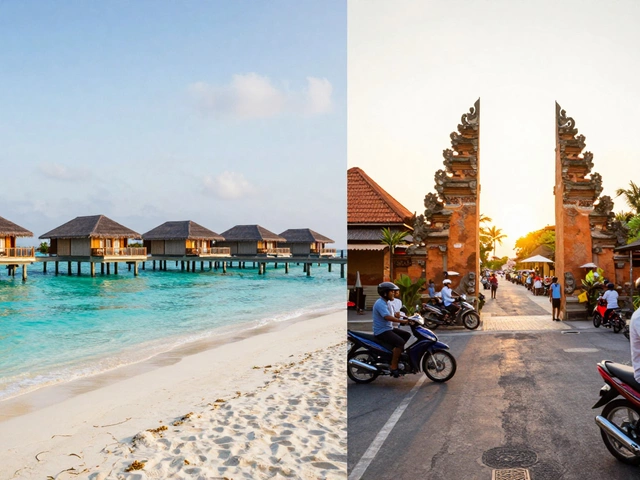
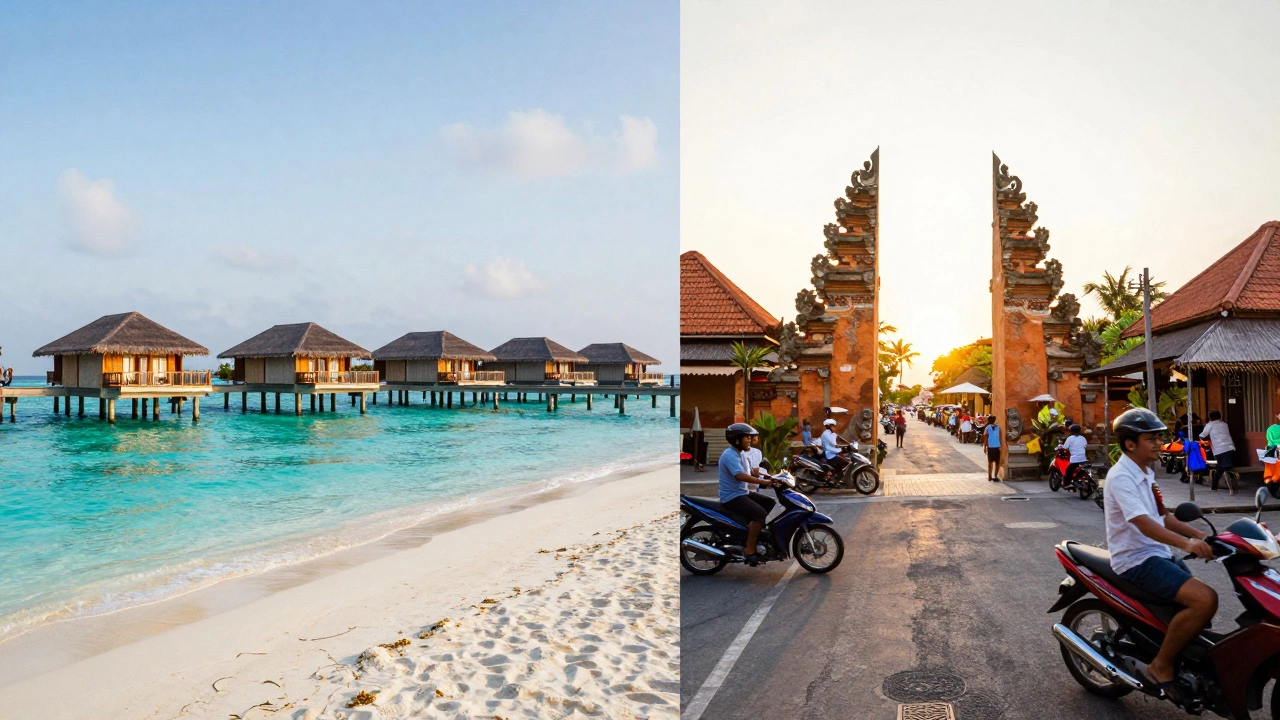
You’re staring at two screens. On the left, a turquoise lagoon with a floating breakfast and zero people in sight. On the right, a vibrant street market filled with incense, motorbikes, and colorful temples. Both look incredible. Both promise paradise. But they are completely different worlds. One offers silence and luxury; the other offers culture and chaos. If you are trying to decide between Bali and the Maldives, you aren’t just choosing a location-you are choosing a vibe.
I’ve spent years traveling across Southeast Asia and the Indian Ocean, and I can tell you this: there is no single "better" destination. There is only the better destination for *you*. Are you looking to disconnect from reality entirely? Or do you want to immerse yourself in a living, breathing culture? Let’s break down exactly what each place offers so you can stop scrolling and start booking.
The Vibe Check: Silence vs. Soul
The first thing you need to understand is the atmosphere. The Maldives is an archipelago of 1,000+ coral islands in the Indian Ocean. Most tourists stay on private resort islands. When you step off your seaplane or speedboat, you enter a controlled environment. It is quiet. It is clean. It is designed for relaxation. You won’t hear traffic. You won’t smell exhaust fumes. You will hear waves and birds. It feels like a bubble.
Bali, on the other hand, is a province in Indonesia that pulses with energy. Even in the most upscale areas like Seminyak or Canggu, life happens around you. You’ll hear the call to prayer mixing with gamelan music. You’ll see locals farming rice paddies next to luxury villas. The air smells like frangipani and wet earth. It’s messy, loud, and incredibly alive. If you crave absolute solitude, Bali might feel overwhelming. If you find silence boring, the Maldives might feel sterile.
Budget Breakdown: What Will It Actually Cost?
Money is usually the tie-breaker. Here is the hard truth: the Maldives is expensive. Not just "a little pricey" expensive, but "sell a kidney" expensive for the average traveler. This isn’t because the food tastes better or the sand is softer. It’s because of logistics. Almost everything has to be imported. Water, fuel, vegetables, alcohol-it all comes by boat or plane. That cost is passed directly to you.
A standard room in a mid-range Maldivian resort can easily run $400-$800 per night. Add in transfers (which can cost $300-$600 round trip per person via speedboat or seaplane), and your budget balloons. Dining is often limited to your resort, where a simple dinner for two can hit $150+
Bali is significantly more affordable. You can find stunning private pool villas for $100-$200 per night. Street food costs less than $2. A nice dinner at a beach club might set you back $30-$50 for two people with drinks. Transportation is cheap; hiring a driver for a full day costs around $40-$50. In Bali, your money goes further. You get more space, more food, and more experiences for the same price tag as one night in the Maldives.
| Expense Category | Bali (USD) | Maldives (USD) |
|---|---|---|
| Mid-Range Accommodation | $100 - $250 | $400 - $800 |
| Transfer (Airport to Stay) | $10 - $50 (Driver/Bus) | $100 - $600 (Speedboat/Seaplane) |
| Dinner for Two | $20 - $60 | $100 - $250 |
| Alcohol (Per Drink) | $5 - $15 | $15 - $30 |
| Activity/Tour | $20 - $100 | $100 - $300 |
Activities: What Do You Actually Do There?
If your idea of a perfect vacation involves lying on a daybed, reading a book, and snorkeling in crystal-clear water, the Maldives wins hands down. The house reefs in many resorts are teeming with turtles, rays, and colorful fish. You don’t even need to leave your island. Some resorts offer underwater restaurants, spa treatments over the ocean, and sunset dolphin cruises. It is pure leisure.
Bali is an activity hub. Yes, you can relax on beaches like Nusa Dua or Sanur, but the real draw is variety. Want to surf? Go to Uluwatu or Canggu. Want to hike? Climb Mount Batur at sunrise. Interested in culture? Visit the ancient temples in Ubud or watch a Kecak fire dance at sunset. You can take cooking classes, join yoga retreats, explore waterfalls, and visit monkey forests. Bali is for travelers who want to *do* things. The Maldives is for travelers who want to *be* somewhere.
Food Scene: From Warungs to White Tablecloths
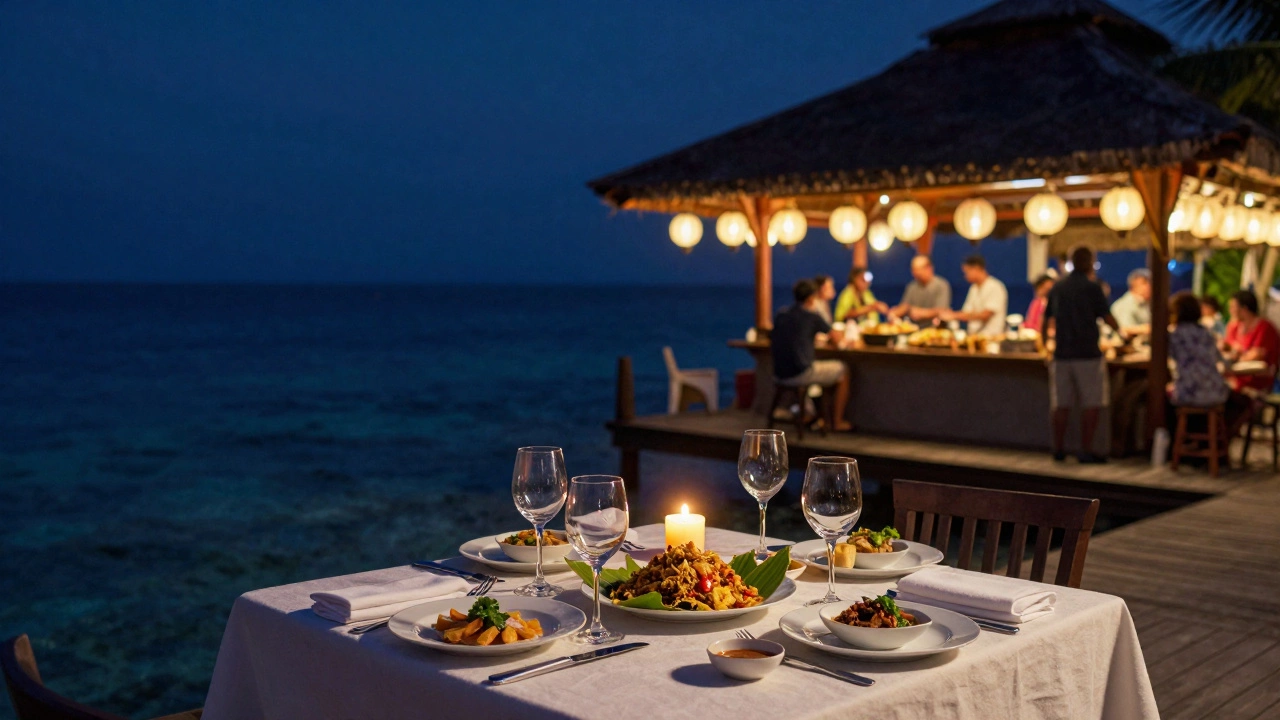
Let’s talk about hunger. In the Maldives, dining options are limited to your resort. While the food is often high-quality and beautifully presented, it lacks authenticity. You’ll eat international cuisine-Italian, Asian fusion, Western classics-but rarely traditional Maldivian fare unless you specifically ask for it. And yes, it’s pricey. Alcohol is also restricted to licensed resorts; local inhabited islands are dry zones.
Bali is a foodie’s paradise. You have access to authentic Indonesian cuisine at warungs (local eateries) for pennies. Try Nasi Goreng (fried rice) or Babi Guling (suckling pig). Then, head to a trendy café in Seminyak for world-class brunch. The coffee scene in Bali is booming, with some of the best specialty roasters in Southeast Asia. You can eat street food safely if you know where to go, and you can dine at Michelin-starred level restaurants without breaking the bank. The variety is endless.
Nature and Scenery: Green Jungles vs. Blue Oceans
The Maldives is monochromatic in the best way possible. It’s all about shades of blue and white. The water changes from deep navy to electric turquoise depending on the depth. The sand is powdery white. It’s breathtakingly beautiful, but visually consistent. Every island looks similar. If you love marine life, this is your heaven. Snorkeling and diving here are world-class, with manta ray cleaning stations and whale shark sightings possible.
Bali offers dramatic contrast. You have black sand beaches, lush green rice terraces, volcanic mountains, and dense jungles. The landscape changes every hour. Drive from the coast to Ubud, and you’re suddenly surrounded by emerald greenery and misty hills. The scenery is diverse and dynamic. However, the water quality in Bali varies. Areas like Nusa Dua have calm, clear waters suitable for swimming. Other spots, like Kuta, can be murky due to runoff. For serious snorkeling, you’d need to take a boat trip to nearby islands like Nusa Penida.

Safety and Ease of Travel
Traveling in the Maldives is incredibly easy. You arrive at Malé International Airport, take a transfer to your resort, and stay there. There’s no navigating traffic, no haggling with taxi drivers, no figuring out public transport. It’s plug-and-play tourism. Safety is high, crime is low, and medical facilities are decent in major resorts. However, if you get sick or injured, evacuation can be costly and slow.
Bali requires more effort. Traffic jams in Canggu and Seminyak are legendary. Scooter accidents are common, so ride carefully or hire a driver. You need to be mindful of scams, especially in tourist-heavy areas. Health-wise, drink bottled water and be cautious with raw ice. But Bali is generally safe for tourists, and the infrastructure is well-developed. You have freedom to move around, change plans, and explore spontaneously. The Maldives locks you into a schedule dictated by your resort’s transfers.
Who Should Choose Where?
Choose the **Maldives** if:
- You are on a honeymoon or celebrating a major anniversary.
- You want total privacy and exclusivity.
- Your budget is flexible, and you prioritize luxury over adventure.
- You love snorkeling, diving, and marine life.
- You want a stress-free, hassle-free experience.
Choose **Bali** if:
- You are traveling on a moderate budget.
- You enjoy culture, history, and local interactions.
- You want variety: surfing, hiking, dining, shopping, and nightlife.
- You prefer vibrant, energetic environments over quiet isolation.
- You want to try authentic local food and unique experiences.
Final Thoughts: It’s Not About Better, It’s About Fit
Both destinations are incredible. The Maldives is a dream come true for those seeking escape and romance. Bali is a playground for those seeking connection and discovery. Don’t let social media dictate your choice. Ask yourself: What do I need right now? Do I need to recharge in silence, or do I need to ignite my spirit with new experiences? Once you answer that, the decision becomes obvious.
Is the Maldives too expensive for a family vacation?
It can be, but not always. Many resorts offer family-friendly packages with kids' clubs and connecting rooms. However, costs add up quickly with transfers and dining. Consider staying on a local island guesthouse in the Maldives for a more budget-friendly option, though amenities will be simpler. For families on a budget, Bali often provides better value with spacious villas and affordable activities.
What is the best time to visit Bali vs Maldives?
The best time to visit both is during their respective dry seasons. For the Maldives, December to April offers sunny skies and calm seas. For Bali, April to October is ideal, with lower humidity and less rain. Avoid January and February in Bali due to heavy monsoon rains. Note that these seasons overlap slightly, so plan accordingly.
Can I visit multiple islands in the Maldives?
Yes, but it’s complicated and expensive. Most resorts are isolated, requiring separate transfers for each island. Liveaboards or multi-island tour packages exist but are pricey. In contrast, hopping between islands in Bali (like Lombok or Nusa Penida) is easier and cheaper, making it better for explorers who want to see varied landscapes.
Is Bali safe for solo female travelers?
Generally, yes. Bali is popular among solo female travelers, especially in areas like Ubud and Canggu. Standard precautions apply: avoid walking alone at night in unfamiliar areas, use reputable transportation, and keep valuables secure. The Maldives is also safe but offers fewer opportunities for social interaction if you’re traveling alone.
Which destination is better for digital nomads?
Bali is vastly superior for digital nomads. It has numerous coworking spaces, reliable Wi-Fi in cafes and villas, and a large expat community. The Maldives lacks infrastructure for remote work, with limited internet access outside resorts and high costs. Unless you’re working remotely from a luxury resort with business facilities, Bali is the clear winner.