Hindu Temple Dress Code Advisor
Plan your attire for a respectful visit to a Hindu temple in India. This tool helps you choose the right clothing based on the temple's strictness and local weather conditions.
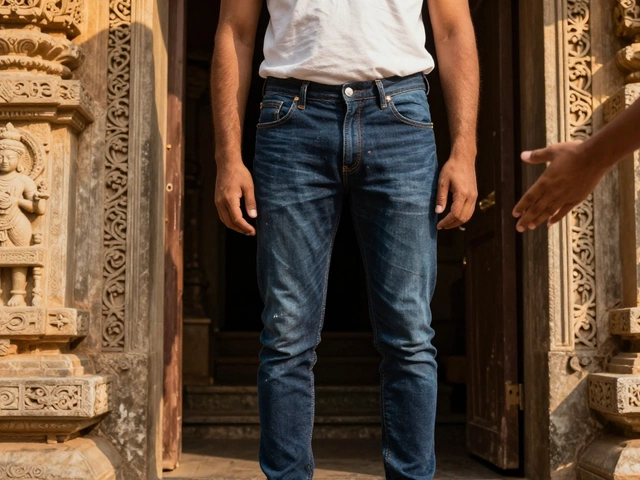
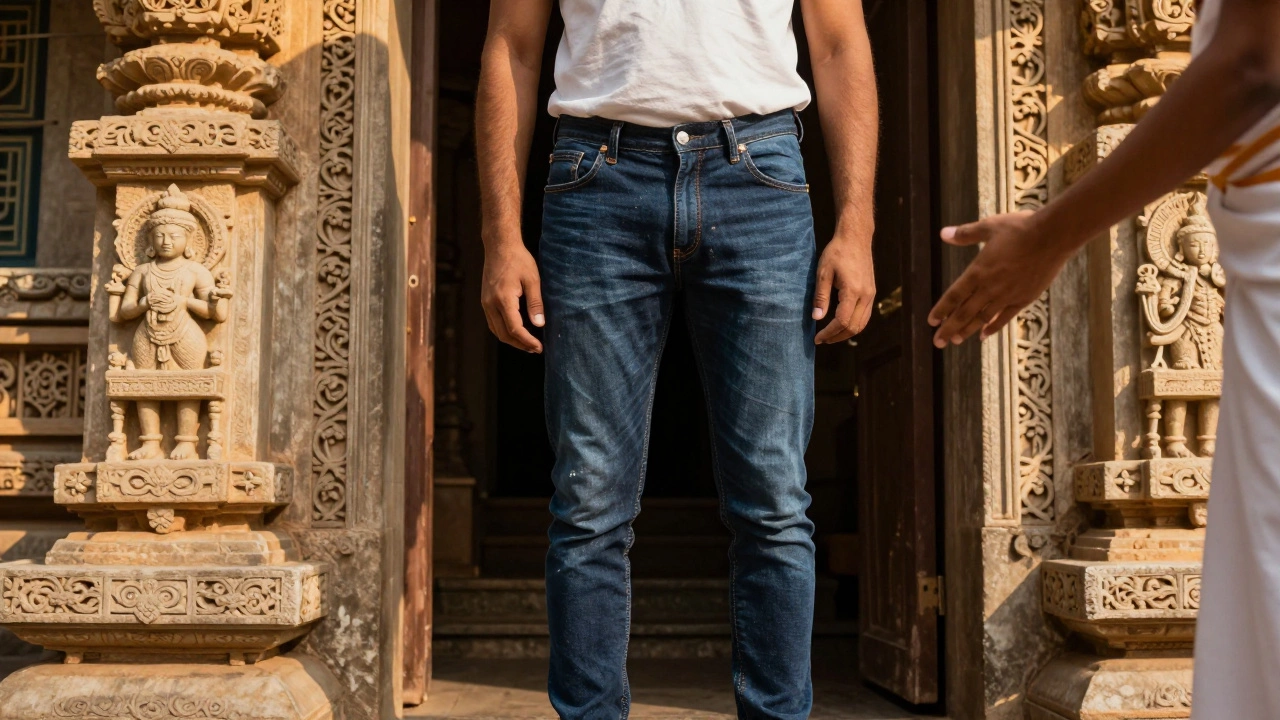
You pack your bags, you book the flight, and you finally arrive at one of India’s most sacred sites. You look down at your favorite pair of skinny jeans, confident they’ll hold up for the day. But as you step toward the entrance, a gentle hand stops you. "Sir/Ma’am, please remove your shoes and... perhaps check your attire." It’s an awkward moment that many travelers face. The question isn’t just about fashion; it’s about respect.
So, can you wear jeans to a Hindu temple? The short answer is: usually yes, but with major caveats. The long answer involves understanding the deep cultural significance of modesty in Hindu worship, the specific rules of different temples, and the practical realities of walking on marble floors barefoot. Getting this right makes the difference between being turned away at the gate and having a profound spiritual experience.
The Golden Rule: Modesty Over Fashion
Hinduism doesn’t have a single central authority dictating global dress codes, but there is a universal principle: Modesty is the cornerstone of respectful attire in religious spaces. Temples are considered the home of the deity. Just as you wouldn’t walk into someone’s living room in gym shorts or a revealing tank top, you shouldn’t enter a temple in clothes that expose too much skin.
The primary rule is simple: cover your shoulders and your knees. This applies to both men and women. If your jeans are high-waisted and full-length (not cropped), they generally pass the test for leg coverage. However, if they are ripped, distressed, or tight-fitting to the point of being skin-tight, some strict priests may object. Denim itself isn’t forbidden, but the *style* of the denim matters immensely.
Think about the fabric. Heavy, dark denim can be incredibly hot in India, especially during the summer months from March to June. While jeans might be acceptable in cooler hill stations like Dharamshala or Udaipur, wearing them in the scorching heat of Varanasi or Rameswaram is not just uncomfortable-it’s impractical. Lighter fabrics like cotton or linen are preferred because they breathe better and dry faster if you get caught in sudden tropical rains.
Jeans vs. Traditional Attire: What Works Best?
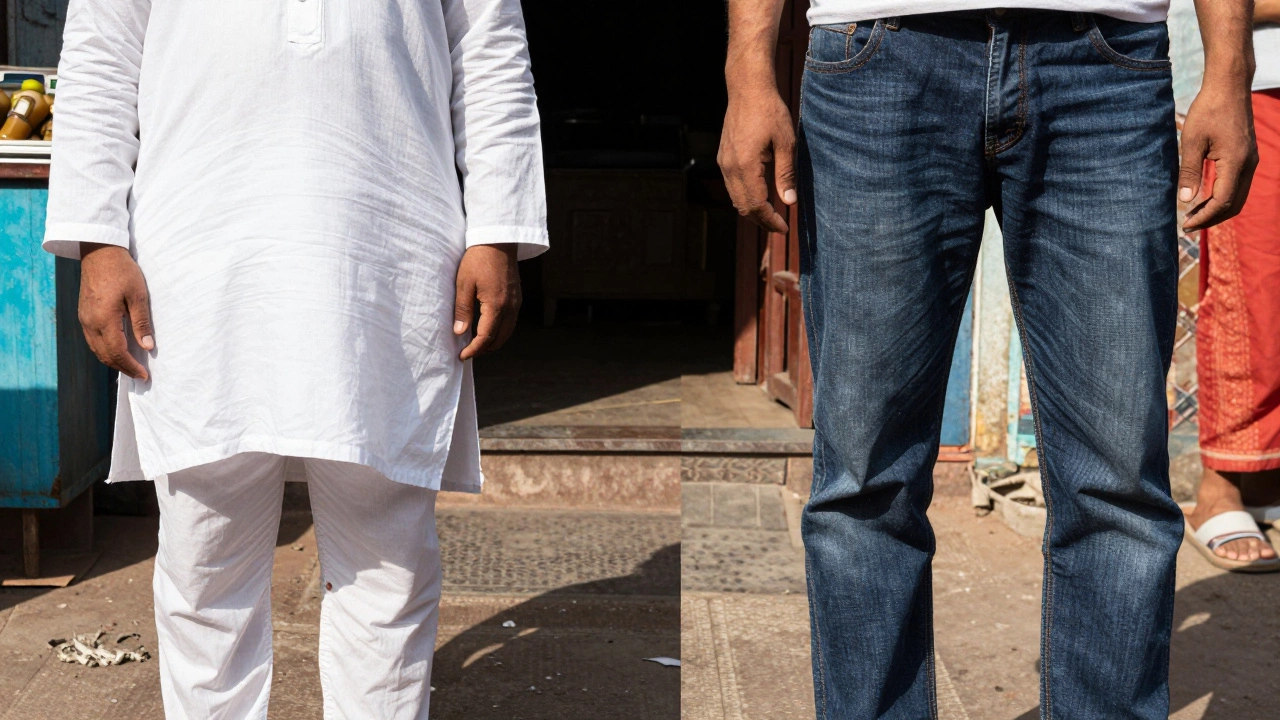
If you want to blend in and show maximum respect, consider swapping your jeans for traditional Indian clothing. It’s affordable, easy to find, and often more comfortable than stiff denim.
| Item | Pros | Cons | Temple Acceptance |
|---|---|---|---|
| Full-Length Jeans | Durable, familiar fit | Hot, heavy, slow to dry | Acceptable if not ripped/tight |
| Cropped Jeans/Capris | Cooler in heat | Exposes ankles/calves | Risk of rejection in strict temples |
| Kurta & Pyjama | Lightweight, breathable, culturally appropriate | May feel unfamiliar to wear | Highly respected and encouraged |
| Salwar Kameez / Saree | Traditional, elegant, covers all skin | Sarees require skill to drape | Gold standard for women |
| Linen Trousers | Professional look, very cool | Wrinkles easily | Excellent alternative to jeans |
For men, a Kurta is a long tunic shirt worn over loose trousers. You can buy these for under $10 USD at local markets. They look great, keep you cool, and signal that you’ve made an effort to respect the culture. For women, a Salwar Kameez is a tunic top paired with gathered trousers. It’s modest, comfortable for sitting on the floor, and widely available. If you prefer western wear, loose linen trousers or maxi skirts paired with a blouse that covers the shoulders are perfect alternatives to jeans.
The Shoe Situation: Why Your Feet Matter More Than Your Pants
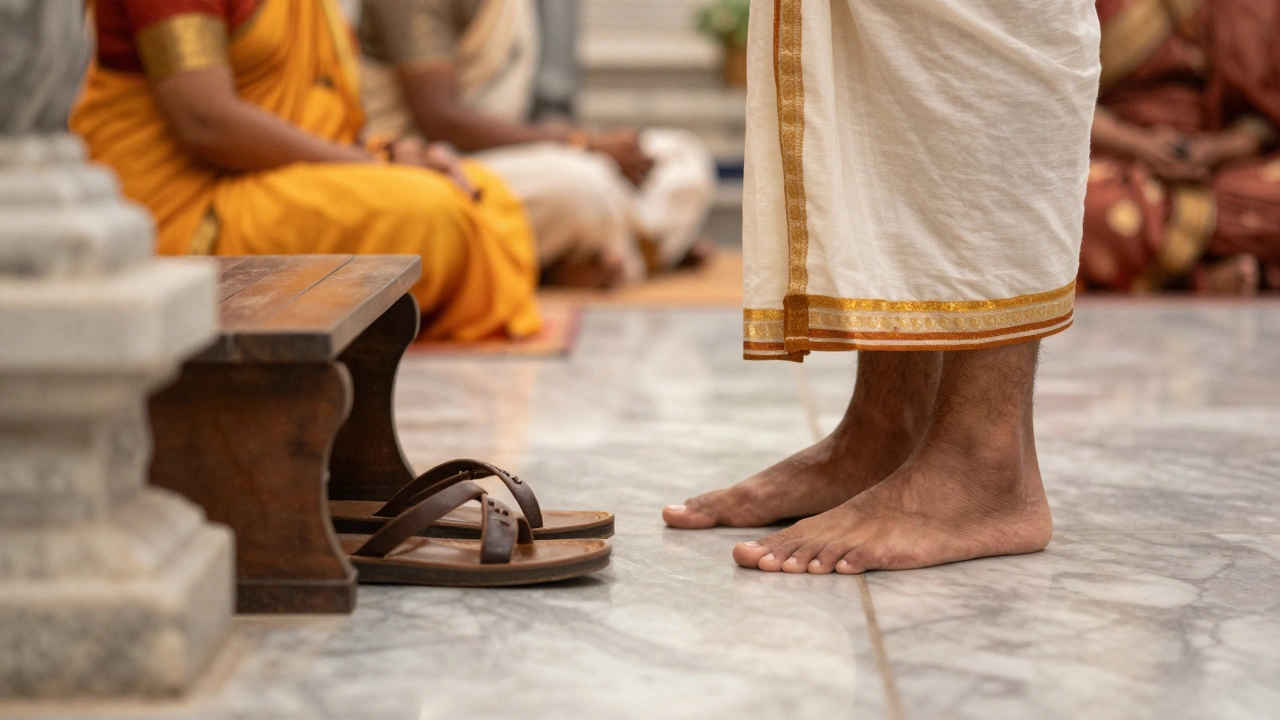
Here’s a fact that catches almost every first-time visitor off guard: you must remove your shoes before entering the main sanctum (garbhagriha) of any Hindu temple. This is non-negotiable. Shoes are considered dirty because they touch the outside world, while the temple floor is sacred.
This creates a logistical challenge for jeans lovers. Most jeans are tight around the ankles and difficult to pull on and off quickly. When you’re standing in line with hundreds of other pilgrims, fumbling with zippers and buttons is frustrating. Loose pants or traditional wear slide off easily. Moreover, once inside, you’ll be walking barefoot on stone, marble, or tile floors. These surfaces can be hard, uneven, or even hot depending on the time of day.
Pro tip: Bring a small cloth bag for your shoes. Many temples have designated shoe racks or areas where you leave your footwear. Carrying your shoes in your hands while praying is awkward and distracting. A lightweight tote bag solves this problem instantly.
Strict vs. Relaxed Temples: Knowing Where You Stand
Not all temples enforce the same rules. Understanding the hierarchy of strictness helps you plan your outfit accordingly.
- Highly Strict: Ancient pilgrimage sites like the Meenakshi Amman Temple in Madurai or the Tirupati Balaji Temple. Here, Western-style clothing, including tight jeans or sleeveless tops, may result in denial of entry. Women are often required to wear sarees or salwar kameez. Men must wear dhotis or lungis (traditional lower garments).
- Moderately Strict: Major tourist temples like the Kashi Vishwanath Temple in Varanasi or the Golden Temple (Sikh, but similar rules apply). Modest Western clothing is accepted, but shoulders and knees must be covered. No ripped jeans, no crop tops.
- Relaxed/Tourist-Friendly: Newer temples or those in urban centers like Mumbai or Delhi may be more lenient. However, even here, showing respect through modest dress enhances your experience and prevents unwanted attention.
If you’re unsure, look at what the locals are wearing. If everyone else is in traditional white or bright-colored cotton, sticking to your black skinny jeans will make you stand out-not necessarily in a bad way, but it might draw stares that distract from your visit.
Practical Tips for Travelers Wearing Jeans
If you decide to stick with your jeans, follow these guidelines to ensure smooth entry and comfort:
- Choose Dark, Solid Colors: Avoid light washes that fade quickly in the sun and avoid any graphic prints or slogans. Solid dark blue or black looks more formal and respectful.
- No Rips or Distressing: Holes in the fabric are seen as disrespectful in conservative settings. Opt for intact, clean denim.
- Pair with a Proper Top: Never wear jeans with a tank top, halter neck, or low-cut blouse. Add a shawl, scarf, or cardigan to cover your shoulders. A simple cotton kurta over jeans is a stylish and respectful hybrid look.
- Carry a Scarf: A lightweight scarf is your best friend. Use it to cover your head if required (some temples ask women to cover their hair), wrap it around your shoulders if you take off a jacket, or use it to wipe sweat.
- Check the Weather: In winter (November-February), jeans are perfectly fine in North India. In summer, switch to lighter materials immediately.
Beyond Clothing: Other Etiquette Essentials
Dress is only part of the equation. To truly navigate a Hindu temple with confidence, remember these additional points:
- Remove Watches and Jewelry: Some temples require you to leave metallic items behind to prevent theft or interference with rituals. Check for lockers near the entrance.
- Photography Rules: Photography is often prohibited inside the main sanctum. Look for signs or ask permission. Flash photography is almost always banned as it disrupts meditation.
- Behavioral Norms: Keep your voice low. Do not point your feet at the deity or other worshippers. Sit cross-legged or kneel rather than stretching your legs out.
- Leather Items: Hindus revere cows, so leather products (belts, wallets, bags) are sometimes frowned upon in very strict temples. Consider using canvas or synthetic alternatives when visiting ancient shrines.
Frequently Asked Questions
Can I wear ripped jeans to a Hindu temple?
It is strongly advised against. Ripped jeans are considered casual and disrespectful in many traditional temples. Priests may deny entry if your clothing exposes too much skin or appears damaged. Choose solid, intact trousers instead.
Do I need to cover my head in a Hindu temple?
Unlike mosques or synagogues, head covering is not universally required in Hindu temples. However, some specific temples or regions may ask women to cover their heads with a scarf. Always observe local customs or carry a lightweight scarf just in case.
What should I do if I don't have modest clothing?
Many major temples rent or sell traditional attire like sarees, lungis, or kurtas at the entrance. Alternatively, purchase a simple cotton scarf or shawl at a nearby market to cover exposed shoulders or legs. Local shops near tourist hubs also sell affordable modest outfits.
Are shorts allowed in Hindu temples?
No, shorts are generally not allowed for either men or women. Knees must be covered. Long trousers, jeans (if modest), or traditional garments like salwar kameez or dhotis are required. Cropped pants that end above the ankle may also be rejected in strict temples.
Is it okay to wear a belt with leather buckle?
In highly orthodox temples, leather items are discouraged due to the reverence for cows. You may be asked to remove your belt or leave it in a locker. Using a fabric belt or elastic waistband avoids this issue entirely and shows greater cultural sensitivity.
Can women wear leggings to a temple?
Leggings alone are usually not sufficient as they are form-fitting and often perceived as underwear-like in conservative contexts. Pair them with a long tunic (kurta) that covers the hips and thighs. Even then, loose trousers are a safer and more respectful choice.