US Train vs. Plane/Car Reality Checker
Select a route to compare how Amtrak stacks up against flying and driving in terms of time and typical costs.
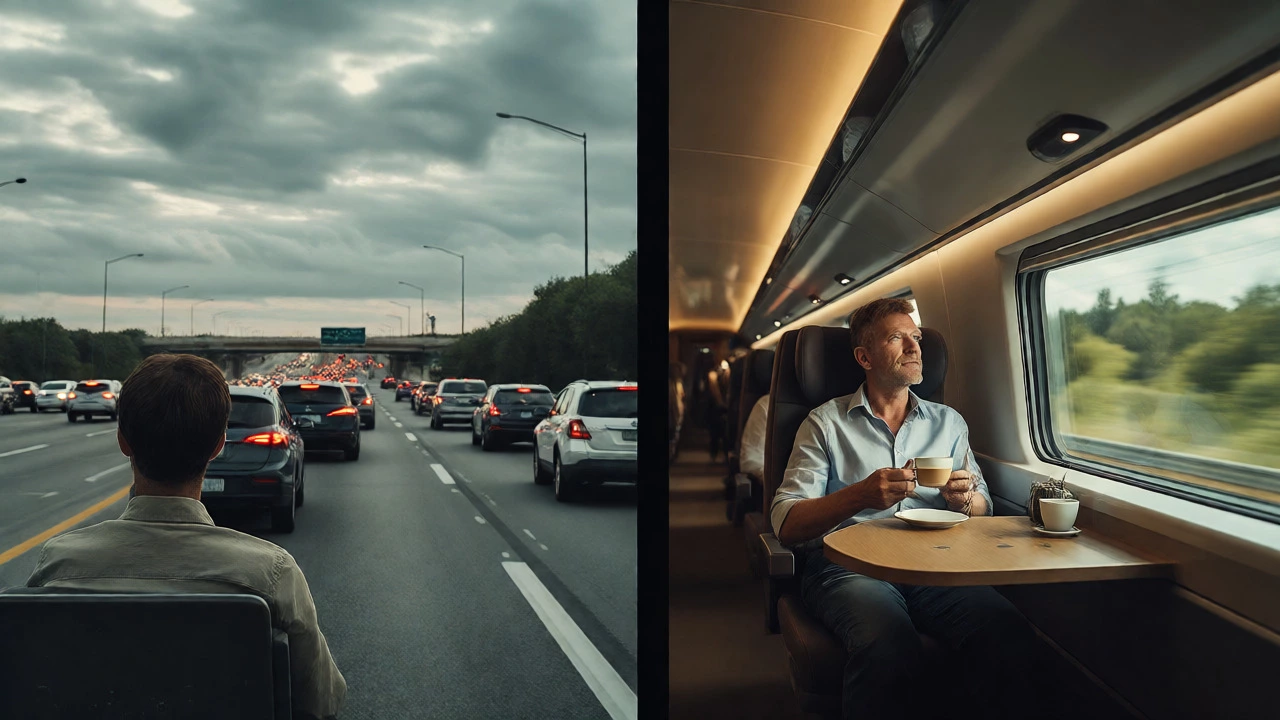
You step off a plane in Chicago, rent a car, and spend four hours stuck on I-94. Meanwhile, someone in Paris hops onto a TGV, sips espresso, and arrives in Lyon in two hours without ever touching a steering wheel. Why does this gap exist? It’s not because Americans hate trains. We love them enough to watch movies about them and buy vintage posters of them. But when it comes to actually using them for daily transit or cross-country trips, we mostly skip them.
The reason isn’t just one big thing. It’s a messy mix of history, geography, money, and bad luck. If you’ve ever wondered why Amtrak feels like an afterthought compared to Europe’s rail networks, here is the honest breakdown.
History Chose Cars Over Rails
America didn’t lose its trains by accident. We chose cars. Hard.
In the early 1900s, the US had the best rail system in the world. Private companies built thousands of miles of track. But by the mid-20th century, things shifted. The government poured billions into building the Interstate Highway System under President Eisenhower. At the same time, airlines got subsidies to expand routes. Trains? They were left to fend for themselves.
Private railroad companies, which owned most of the tracks, started losing money on passenger service. Freight was where the real profit lay. So they cut passenger lines. By the 1970s, the system was collapsing. Congress created Amtrak in 1971 to save what was left. But Amtrak didn’t own the tracks. It had to beg private freight companies for permission to use their rails. That’s still true today.
| Feature | United States | Europe (e.g., France/Germany) |
|---|---|---|
| Track Ownership | Mostly private freight companies | State-owned public networks |
| Priority at Crossings | Freight trains often have priority | Passenger high-speed trains have priority |
| Average Speed | 68 mph (Northeast Corridor exception) | 186+ mph (TGV/ICE) |
| Funding Model | Mixed public/private, fragmented | Centralized state investment |
Geography Works Against Us
Let’s be real: the US is huge. Really huge.
France can connect Paris to Marseille in three hours because those cities are close. In the US, New York to Los Angeles is nearly 3,000 miles. Even if we had bullet trains, that trip would take over 15 hours. Who wants to sit on a train for that long when a flight takes six?
Rail works best when cities are clustered within 300-500 miles of each other. Europe has this density. The US Northeast Corridor (Boston to Washington D.C.) is the only place with similar density. That’s why the Acela Express is our fastest train-it runs through a corridor where people actually live close together. Everywhere else? You’re crossing deserts, plains, and mountains with few stops in between.
The Freight Conflict Problem
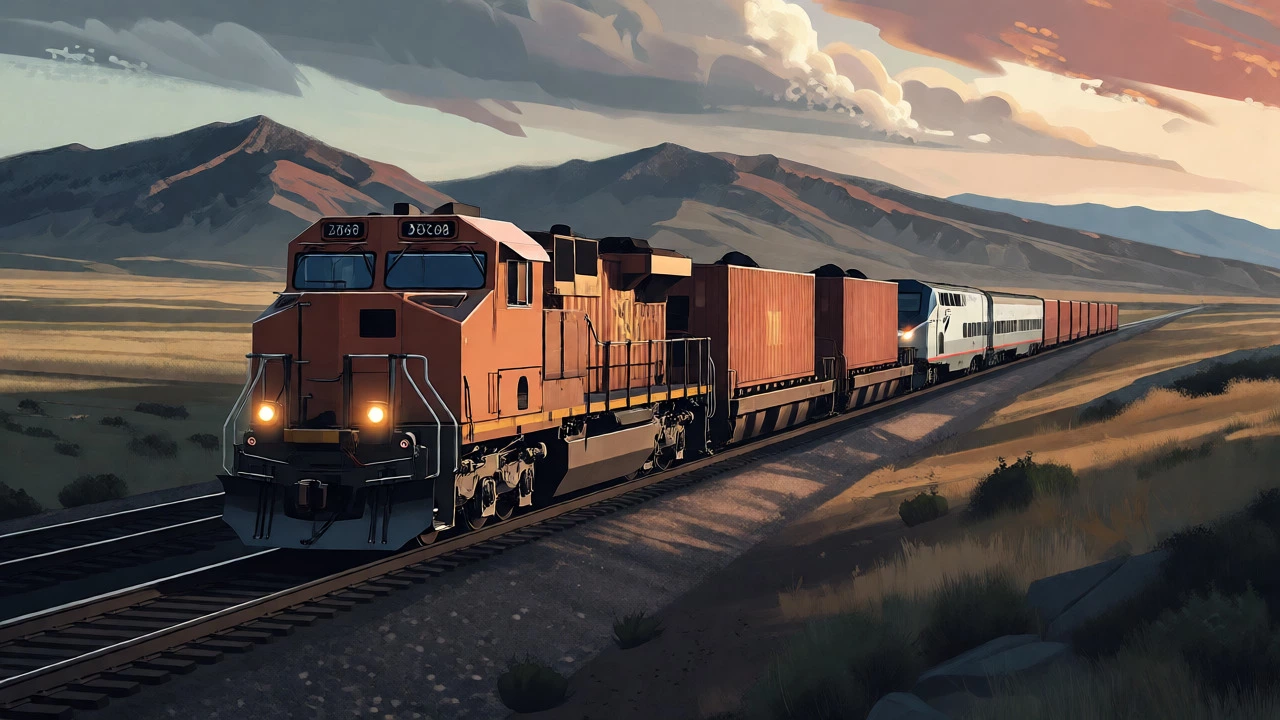
This is the biggest technical issue. Most US rail tracks are owned by private freight giants like BNSF and Union Pacific. They make money moving coal, grain, and containers. Passenger trains are a nuisance to them.
Imagine trying to drive your sedan on a highway full of semi-trucks that never stop. That’s what Amtrak does. Freight trains are long, heavy, and slow to start or stop. When a passenger train needs to pass, it often gets delayed waiting for a freight train to clear the track. This causes cascading delays across the network.
In Europe, governments own the tracks and prioritize passengers. In the US, the law says freight companies must let Amtrak use their rails, but enforcement is weak. And since Amtrak pays access fees, there’s little incentive for freight owners to upgrade tracks for speed.
Cost and Convenience Mismatch
People don’t choose trains because they’re romantic. They choose them because they’re cheaper or faster. In the US, trains usually fail both tests.
- Speed: Flying from Dallas to Denver takes 2 hours plus airport time. Driving takes 12 hours. Taking the train? About 18 hours. You lose a whole day.
- Price: A round-trip ticket from New York to Chicago might cost $200-$400. A flight could be $150 if booked early. Unless you value legroom or scenery, the math doesn’t work.
- Frequency: Many routes run once a day. Miss it, and you wait 24 hours. Flights run every hour.
For business travelers, time is money. For families, flexibility matters. Trains offer neither consistently outside the Northeast.
The Luxury Niche Exception
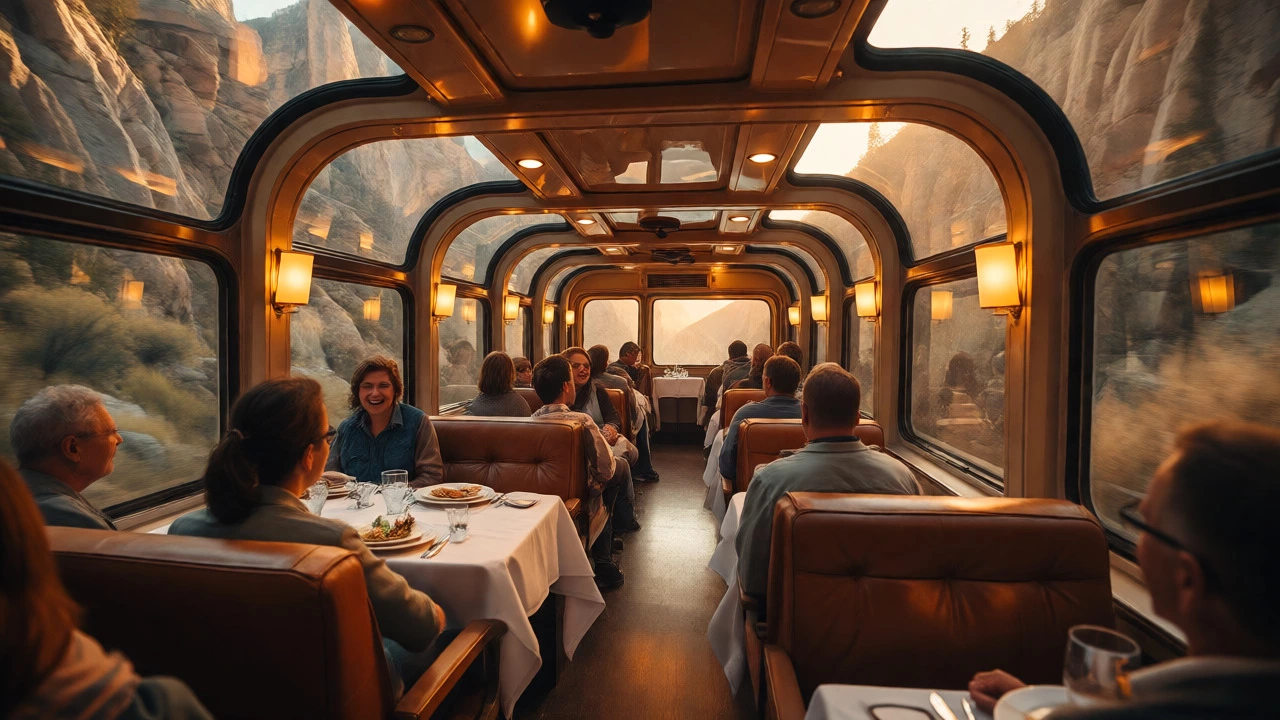
Here’s the twist: while everyday train travel struggles, luxury rail is booming. Think Rocky Mountaineer in Canada or the Grand Canyon Railway. These aren’t about commuting-they’re experiences.
People pay thousands of dollars to ride these trains because they want the journey, not just the destination. Glass-domed cars, fine dining, scenic routes. This proves Americans will ride trains-if the experience is special.
But this niche doesn’t solve the mass transit problem. You can’t build a national economy on vacation trains. Still, it shows demand exists when quality matches price.
Is Change Coming?
There’s hope. The Infrastructure Investment and Jobs Act passed in 2021 allocated $66 billion for rail improvements. Some states are investing in regional corridors. California’s high-speed rail project, though plagued by delays, aims to connect LA and SF.
But political will fluctuates. Building new tracks takes decades and billions. Meanwhile, electric cars and autonomous vehicles keep improving. The competition isn’t just planes anymore-it’s self-driving cars that let you nap on the highway.
If the US wants viable train travel, it needs to separate passenger and freight lines in key corridors, subsidize tickets to compete with airfares, and market reliability over romance. Until then, trains remain a curious footnote in American transport-loved in theory, ignored in practice.
Is Amtrak profitable?
No, Amtrak is not profitable on its own. It relies heavily on federal subsidies to operate. However, some specific routes like the Acela Express in the Northeast generate positive revenue due to high demand and better infrastructure.
Why are US trains so slow?
US trains are slow primarily because they share tracks with freight trains, which have right-of-way. Additionally, much of the existing rail infrastructure is old and not upgraded for high speeds, unlike dedicated high-speed rail lines in Asia and Europe.
Can I travel coast-to-coast by train in the US?
Yes, via Amtrak's Southwest Chief or Sunset Limited, but it takes roughly 60-67 hours. It is a popular option for tourists seeking a scenic experience rather than efficient transportation.
Does the US have high-speed rail?
The Acela Express reaches speeds up to 150 mph on parts of the Northeast Corridor, but average speeds are lower due to shared tracks and older infrastructure. True high-speed rail (over 186 mph) is currently limited to testing phases and projects like California High-Speed Rail.
Why did the US abandon passenger trains?
Post-WWII policies favored highways and aviation. Subsidies went to roads and airports, while private railroads focused on profitable freight operations, leading to the decline of passenger services until Amtrak's creation in 1971.