Indian Cultural Region Explorer
Select a region to see its unique cultural experiences.
India isn’t just a country-it’s a living museum of traditions, sounds, smells, and colors that have been passed down for thousands of years. If you’ve ever seen a Bollywood dance number, smelled cardamom drifting from a street kitchen, or watched a woman in a bright silk sari walk past a 1,000-year-old temple, you’ve touched just a fraction of what makes Indian culture unforgettable. This isn’t about postcards or tourist brochures. It’s about the rhythm of daily life that hasn’t changed in centuries, even as the world moves faster around it.
Food That Tells a Story
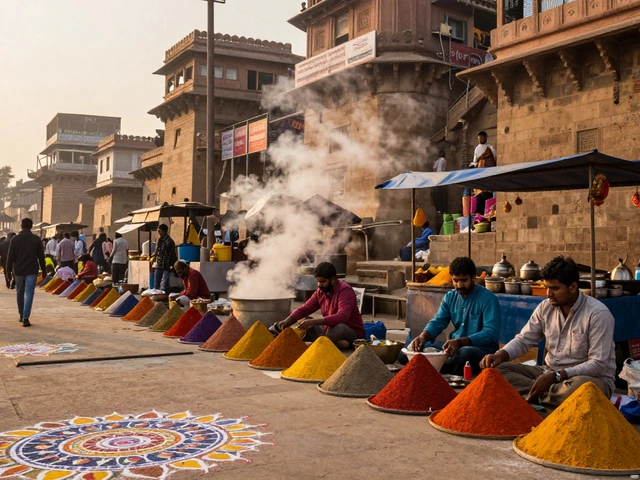
Indian cuisine isn’t a single dish. It’s 29 states, 22 official languages, and a thousand ways to cook rice. In the north, butter chicken simmers in creamy tomato sauce with tandoor-charred naan. In the south, coconut milk and curry leaves turn lentils into tangy sambar. In the east, fish cooked in mustard oil tastes like the rivers it came from. And in the west, street vendors fry bhajjis in spiced chickpea batter while rain clouds roll in over Mumbai.
What makes it special isn’t just the spices-it’s the intention. Every meal follows a rhythm. Breakfast isn’t rushed. Lunch includes a balance of sweet, sour, salty, bitter, and spicy. Dinner ends with something sweet, often made fresh that day. Vegetarianism isn’t a trend here-it’s a way of life for over 40% of the population, rooted in ancient beliefs about non-violence and respect for all life.
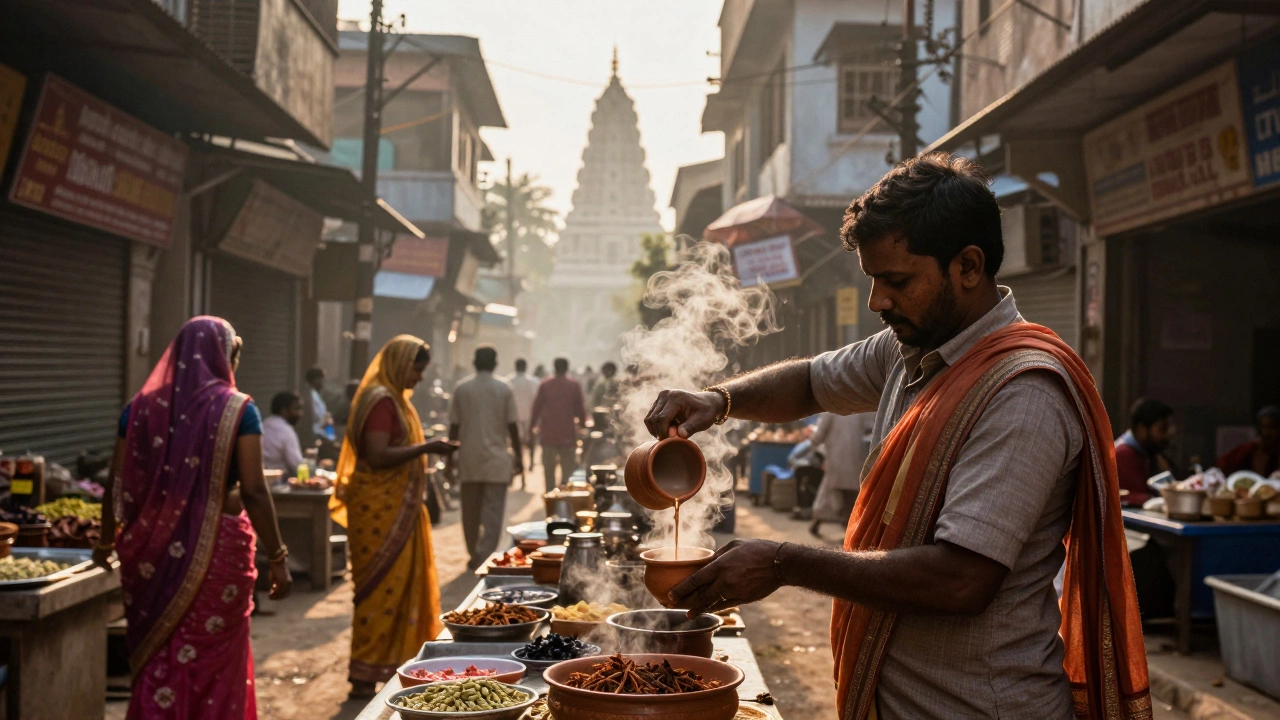
And then there’s chai. Not the weak, sugary version you might get abroad. Real Indian chai is brewed strong with milk, ginger, cardamom, and sugar-boiled together until it turns golden. You drink it from a clay cup, standing on a sidewalk, watching the world go by. It’s not a beverage. It’s a moment.
Festivals That Shake the Earth
India doesn’t celebrate holidays. It throws entire seasons into the air and dances with them.
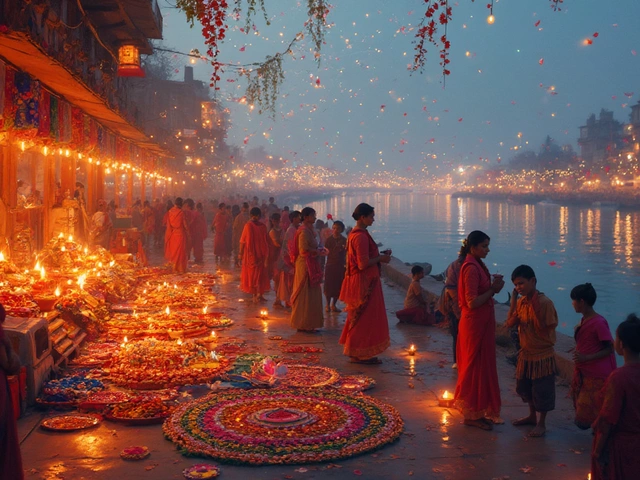
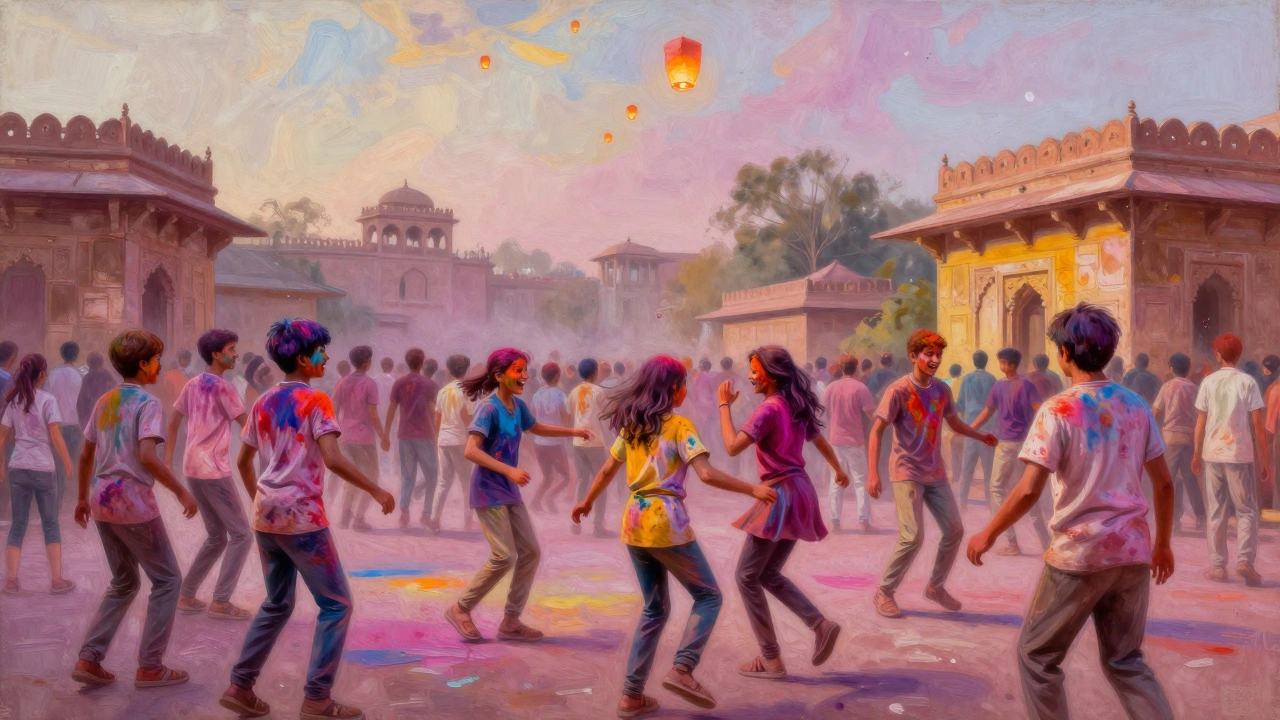
Holi, the festival of colors, turns cities into paint bombs. People smear each other with powdered dyes, dance to drums, and forget social boundaries for a day. In Varanasi, the Ganges glows with floating lamps during Diwali, the festival of lights. Millions of oil lamps are lit to honor the return of Lord Rama, turning rivers and rooftops into constellations.
On the west coast, Ganesh Chaturthi brings giant clay idols of Lord Ganesha into homes and public squares. After days of singing and dancing, the idols are carried into the sea in processions so loud they drown out traffic. In the northeast, Bihu marks the harvest with folk dances that have been performed for over 800 years. Each festival ties back to nature, seasons, or stories passed down through generations-not just religion, but identity.
Music and Dance That Move the Soul
Indian classical music isn’t performed. It’s summoned. A sitar player doesn’t play notes-they coax them out, bending strings with their fingers, letting each tone hang in the air like incense smoke. The tabla drummer doesn’t keep time-they create a conversation between rhythm and silence.
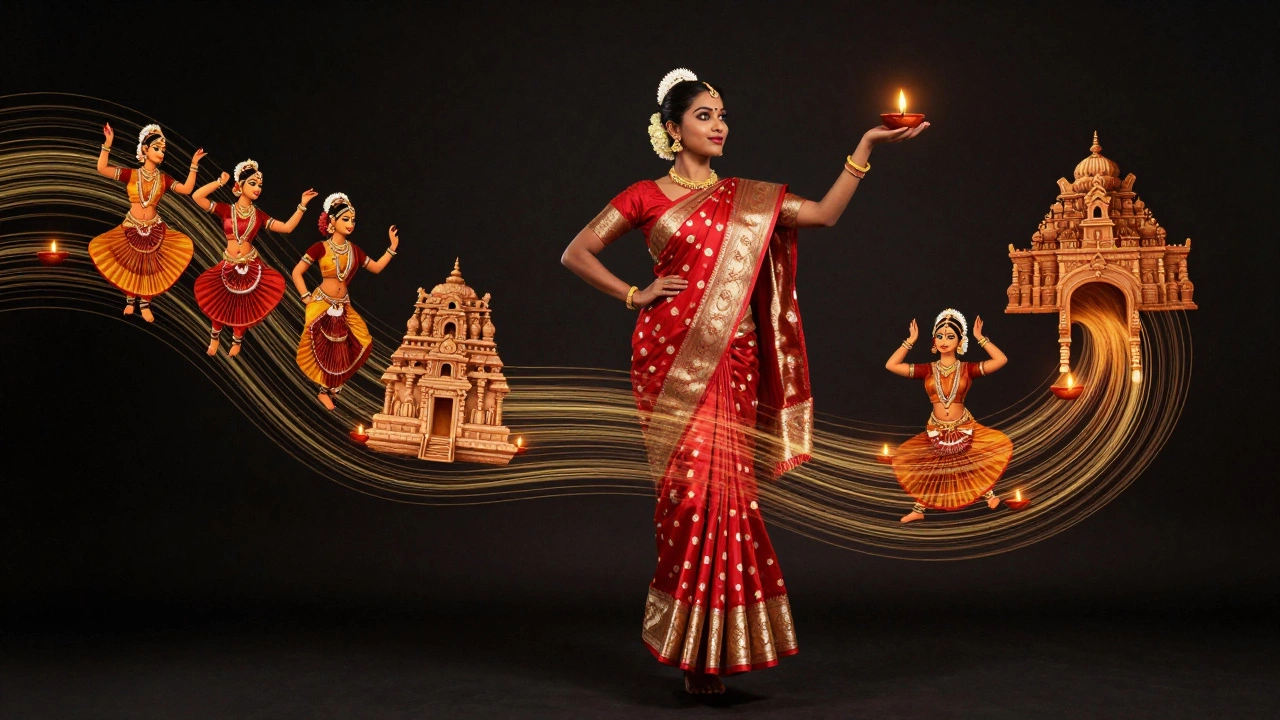
Dance is no different. Bharatanatyam, from Tamil Nadu, tells ancient stories through precise hand gestures and footwork. Kathak, from Uttar Pradesh, spins like a whirlwind, each turn a verse in a poem. Odissi flows like water, with curved postures that mimic temple sculptures. These aren’t stage performances-they’re living prayers.
And then there’s Bollywood. It’s not just movies. It’s song-and-dance epics that mix romance, drama, and social messages into three-hour spectacles. A single film might have five musical numbers, each with different costumes, choreography, and moods. In rural villages, people still sing Bollywood tunes while farming. In cities, teenagers learn dance moves from YouTube tutorials. It’s culture that breathes.
Textiles That Carry History
Walk into any Indian market, and you’ll see fabric that looks like it was woven from rainbows. Banarasi silk from Varanasi has gold thread stitched so fine it glows like liquid metal. Kanchipuram silk from Tamil Nadu is heavy enough to last generations. Bandhani from Rajasthan is tie-dyed by hand, each dot placed with a pin. Chanderi from Madhya Pradesh is so light it floats like mist.
These aren’t just clothes. They’re heirlooms. A bride in South India wears a nine-yard sari woven over months. A farmer in Odisha wears a dhoti dyed with natural indigo that fades slowly, like memories. Handloom weaving supports over 4 million families. Every thread has a story: who spun it, where it came from, what prayer was whispered while weaving it.
Even the way you wear it matters. A sari isn’t just draped-it’s folded, tucked, and pinned in ways that vary by region. In Maharashtra, it’s worn with a pleat in the back. In Kerala, it’s paired with a golden-bordered mundu. There’s no single way to wear it. There are dozens. And each way says something about where you’re from.
Architecture That Breathes
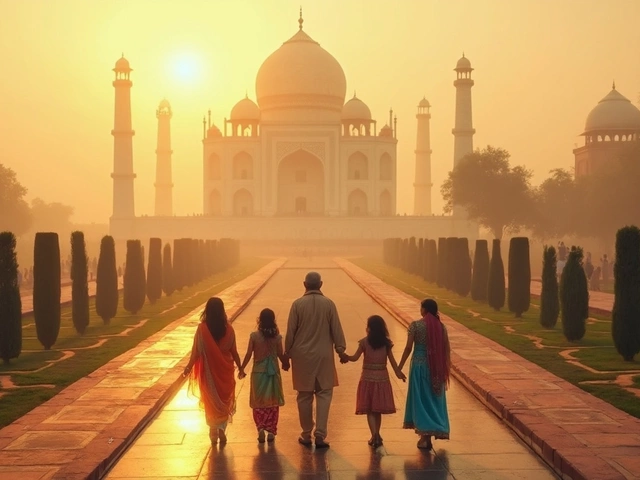
India’s buildings don’t just stand. They sing. The Taj Mahal isn’t just a tomb-it’s a poem in marble, built with 28 types of stone, inlaid with lapis lazuli and jade. The stepwells of Gujarat descend like staircases into the earth, carved with thousands of statues, designed to cool the air and collect rainwater for centuries.
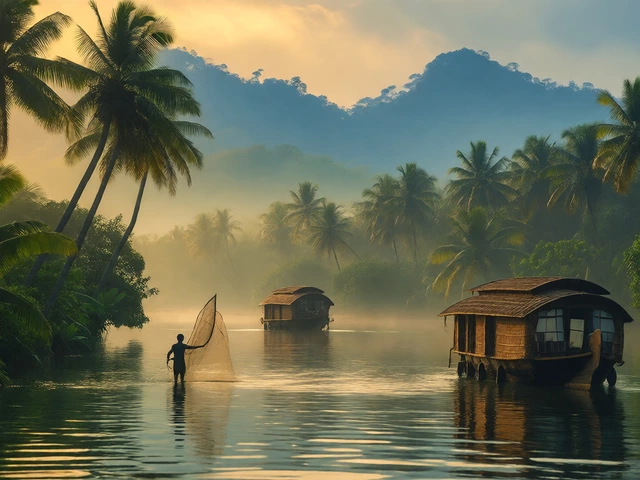
In Kerala, homes have sloping roofs made of terracotta tiles and open courtyards that catch every breeze. In Rajasthan, havelis have frescoed walls that tell stories of kings and lovers. The temples of Khajuraho are covered in sculptures so detailed you can see the veins in the hands of gods.
And then there’s the way space is used. A single home might have a prayer room, a courtyard for cooking, a veranda for guests, and a rooftop for sleeping under the stars. Everything has a purpose. Nothing is wasted. Even the smallest alleyway might have a shrine, a water pump, and a bench where neighbors sit and talk.
What You Won’t See in Guidebooks
India’s culture isn’t just in temples or festivals. It’s in the quiet moments.
It’s in the way a grandmother teaches her granddaughter to tie a knot in a thread for good luck. It’s in the sound of temple bells ringing at dawn in a village where no tourists ever come. It’s in the way a street vendor remembers your name after you buy samosas every Tuesday. It’s in the silence between the last note of a raga and the first breath of the next.
It’s in the fact that people still greet each other with ‘Namaste’-hands pressed together, bowing slightly-not because it’s polite, but because it’s sacred. It means ‘the divine in me recognizes the divine in you.’
And that’s what India is famous for. Not just the sights. Not just the food. But the way it makes you feel seen-even if you’re just passing through.
What is India most famous for culturally?
India is most famous for its deep-rooted traditions in music, dance, cuisine, textiles, and festivals that have survived for thousands of years. From the intricate handloom weaves of Banarasi silk to the explosive colors of Holi, Indian culture blends spirituality, art, and daily life in ways that are both unique and universally moving. The country’s diversity means no single thing defines it-but together, these elements create a cultural fabric unlike any other.
What are the top 5 cultural experiences in India?
The top five cultural experiences are: attending a Diwali or Holi festival, watching a classical Bharatanatyam or Kathak dance performance, tasting regional street food like pani puri or dosa, visiting a handloom village to see silk or ikat weaving, and listening to a live sitar or tabla recital at dusk. Each of these offers a direct connection to India’s living traditions-not staged for tourists, but lived every day.
Is Indian culture the same across the country?
No. India’s culture varies dramatically by region. In the north, you’ll find Mughal-influenced cuisine and Punjabi bhangra music. In the south, temple rituals, Carnatic music, and rice-based meals dominate. In the northeast, tribal dances and bamboo crafts reflect Southeast Asian ties. Even language changes every 100 miles. What unites them is a shared respect for tradition, family, and spiritual depth-but how they’re expressed is as diverse as the landscape.
What should I wear to respect Indian culture?
When visiting religious sites like temples or gurdwaras, cover your shoulders and knees. In rural areas, women often wear long skirts or salwar kameez instead of shorts or tank tops. While cities are more relaxed, modest clothing shows respect. You don’t need to wear traditional clothes, but avoiding revealing outfits helps you blend in and be seen as considerate, not intrusive.
Can I participate in Indian festivals as a tourist?
Absolutely. Many festivals welcome outsiders. During Holi, you’ll be invited to throw colors. At Diwali, you might be offered sweets and oil lamps. In Kerala, tourists are encouraged to join Onam feasts. Just follow local cues: wait to be invited, don’t take photos of rituals without asking, and never touch sacred objects. The best way to participate is with humility and curiosity-not as a spectator, but as a guest.
India doesn’t ask you to understand its culture. It asks you to feel it. And if you listen-really listen-you’ll hear it in the clink of a teacup, the rustle of a sari, the echo of a temple bell. It’s not something you see. It’s something you carry home.