Khichdi: India's Comfort Food with Deep Cultural Roots
When you think of khichdi, a simple, nourishing dish made from rice and lentils, often cooked with spices and vegetables. It's known as kitchari, and it’s the go-to meal in homes from Gujarat to Bengal—not because it’s fancy, but because it works. Whether you’re sick, fasting, or just need something gentle, khichdi shows up.
What makes khichdi more than just rice and dal? It’s the way it ties into daily rituals. In many households, it’s the first solid food given to babies. During religious fasts like Navratri, it’s the only thing on the table because it’s sattvic—pure and easy to digest. Ayurveda calls it a balancing dish, perfect for calming the digestive system. And in temples, especially in South India, it’s offered as prasad—not because it’s expensive, but because it’s pure. You’ll find it in Rajasthan with ghee and jeera, in Bengal with potatoes and mustard oil, and in Maharashtra with a hint of jaggery. Each version tells a story about where it’s made.
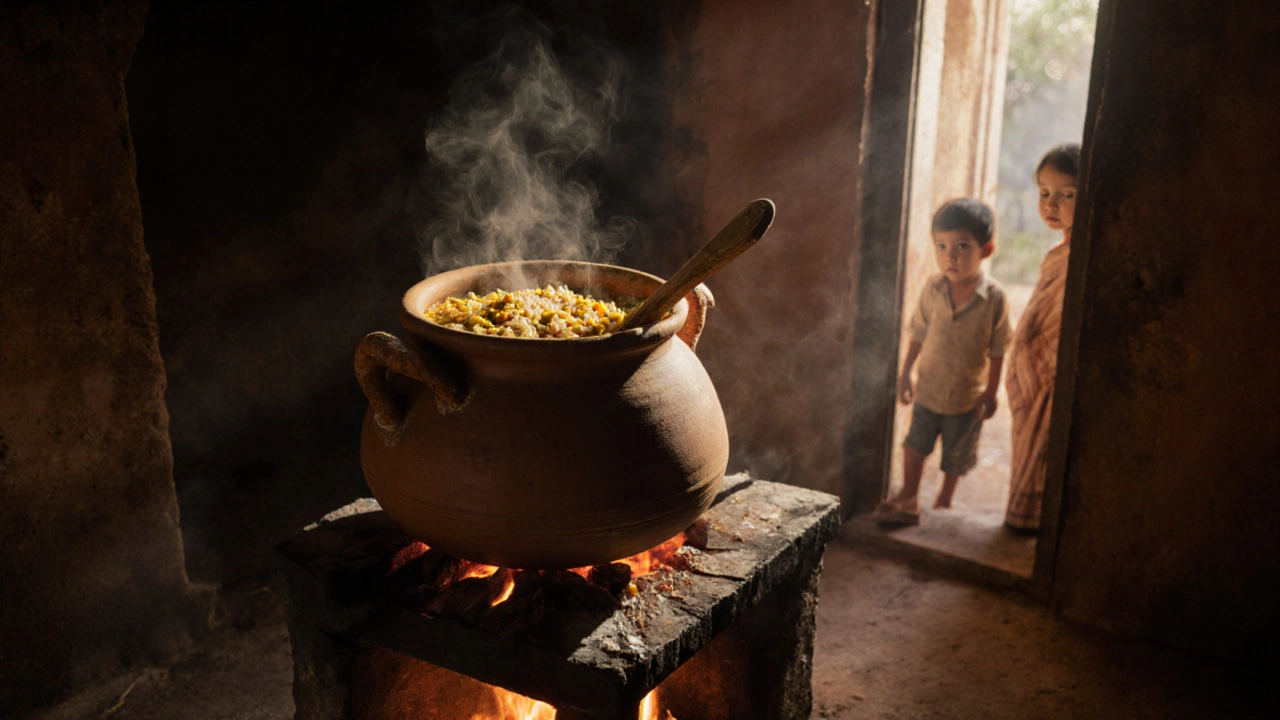
It’s not just food—it’s a bridge. A mother feeds her child khichdi after a fever. A monk eats it during meditation retreats. A family gathers around it during Diwali, when the house is full but the kitchen stays quiet. You won’t find it on five-star menus much, but you’ll find it in every village kitchen, every hospital tray, every grandmother’s pot. It doesn’t need decoration. It doesn’t need a hashtag. It just needs to be warm, plain, and real. Below, you’ll find posts that explore how khichdi fits into India’s wider food culture—from its role in healing traditions to the quiet moments it shapes in everyday life.
What Is India's National Dish? The Truth Behind the Food Everyone Talks About
India doesn't have an official national dish, but khichdi comes closest-a humble, universal meal eaten across every state. Discover why biryani, curry, and chaat aren't the real answer.