Gwalior Fort: History, Architecture, and Why It’s India’s Most Powerful Fortress
When you think of Gwalior Fort, a massive hilltop fortress in Madhya Pradesh that has guarded central India for over a millennium. Also known as Gopachal Parvat, it’s not just a ruin—it’s a living record of India’s warrior kings, poets, and emperors. This isn’t just another old stone structure. Gwalior Fort sits on a 300-foot cliff, making it nearly impossible to storm, and its walls have withstood sieges from Delhi sultans, Maratha warriors, and British cannons. What makes it special isn’t just its size—it’s how deeply its history is woven into the soul of North India.
Inside its walls, you’ll find palaces built by rulers who didn’t just want to defend their land—they wanted to live like gods. The Man Mandir Palace, painted in vibrant tiles and carved with intricate jharokhas, was built by the Tomar king Man Singh in the 15th century. It’s one of the few surviving examples of early Hindu architecture under Islamic rule. Then there’s the Teli Ka Mandir, a temple that defies typical temple design—its shape looks more like a South Indian stupa than a North Indian shrine, hinting at how trade and culture moved across the subcontinent. These aren’t random buildings. They’re proof that Gwalior Fort was never just a military base. It was a center of art, music, and learning. The legendary musician Tansen, one of the Nine Gems of Akbar’s court, was born here. You can still visit the spot where he practiced, and locals say the echoes of his ragas linger in the air.
What makes Gwalior Fort different from other Indian forts? It doesn’t just show power—it shows adaptation. The same walls that held off invaders later housed royal courts, temples, and even a prison. The Scindias, who ruled Gwalior in the 18th and 19th centuries, turned it into a symbol of modern royalty, adding gardens and European-style pavilions. Even today, the fort feels alive—not because it’s crowded with tourists, but because you can feel the weight of centuries in every step you take. Whether you’re standing on the ramparts watching the sun set over the city below, or exploring the hidden staircases that once carried royal messengers, you’re walking through layers of history that most guidebooks skip.
What you’ll find in the posts below are real stories from travelers who’ve walked these halls, climbed these stairs, and listened to the silence between the echoes. From the best time to visit to avoid crowds, to the hidden shrines most tourists never see, these aren’t generic lists. They’re firsthand accounts of what Gwalior Fort truly feels like when you’re there—not just as a sight, but as a presence.
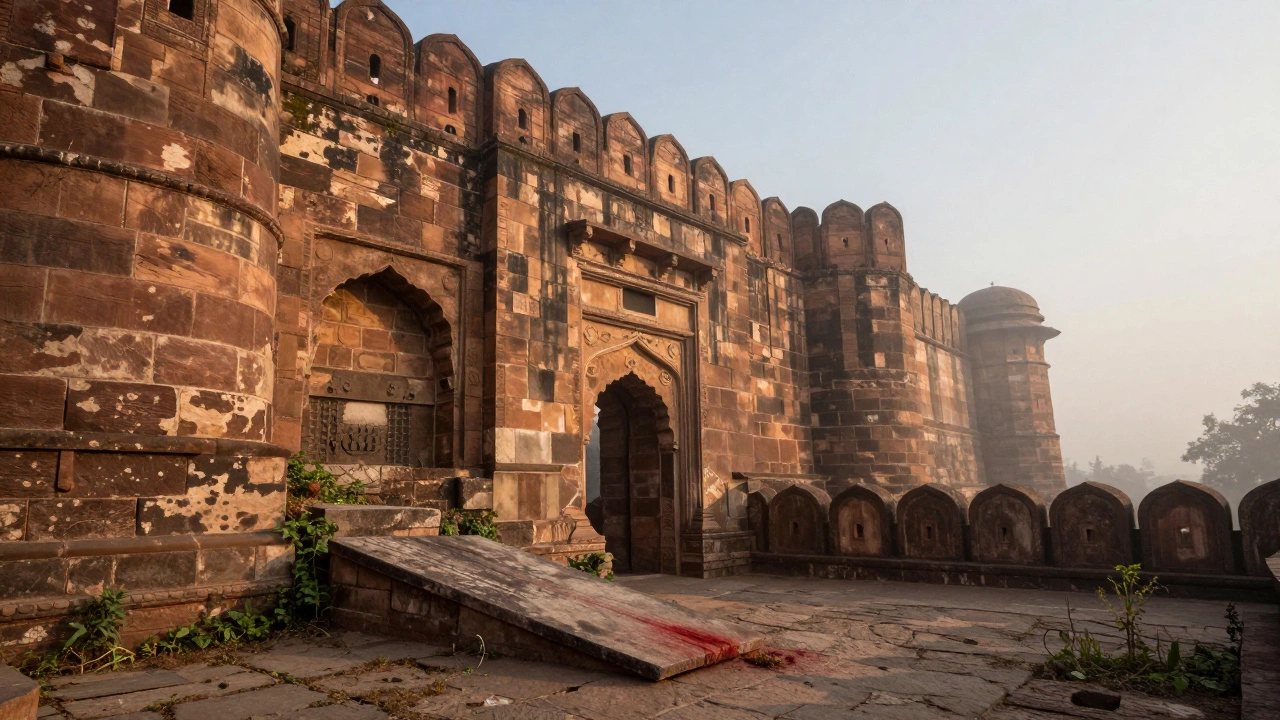
Which City in India Is Known as the City of Blood? Truth Behind the Name
Gwalior, known as the City of Blood in India, is a place where centuries of warfare left deep scars. Explore its haunted fort, real battle histories, and why it's a must-visit for serious adventure travelers.