Tirupati Temple Wait Time Calculator
Plan Your Visit
Estimate your waiting time for darshan based on your visit timing and booking options
Estimated Wait Time
Total waiting time
The Tirumala Venkateswara Temple in Tirupati, Andhra Pradesh, is the most visited temple in India - and by a huge margin. Every year, more than 40 million pilgrims walk, drive, or take buses to this hilltop shrine to see Lord Venkateswara, an incarnation of Vishnu. That’s more than the combined attendance of the Vatican, Mecca, and the Kaaba during their peak seasons. If you’ve ever wondered why so many people make the journey to this one temple, the answer isn’t just faith - it’s history, scale, and a system built over centuries to handle mass devotion.
Why Tirupati Draws Millions
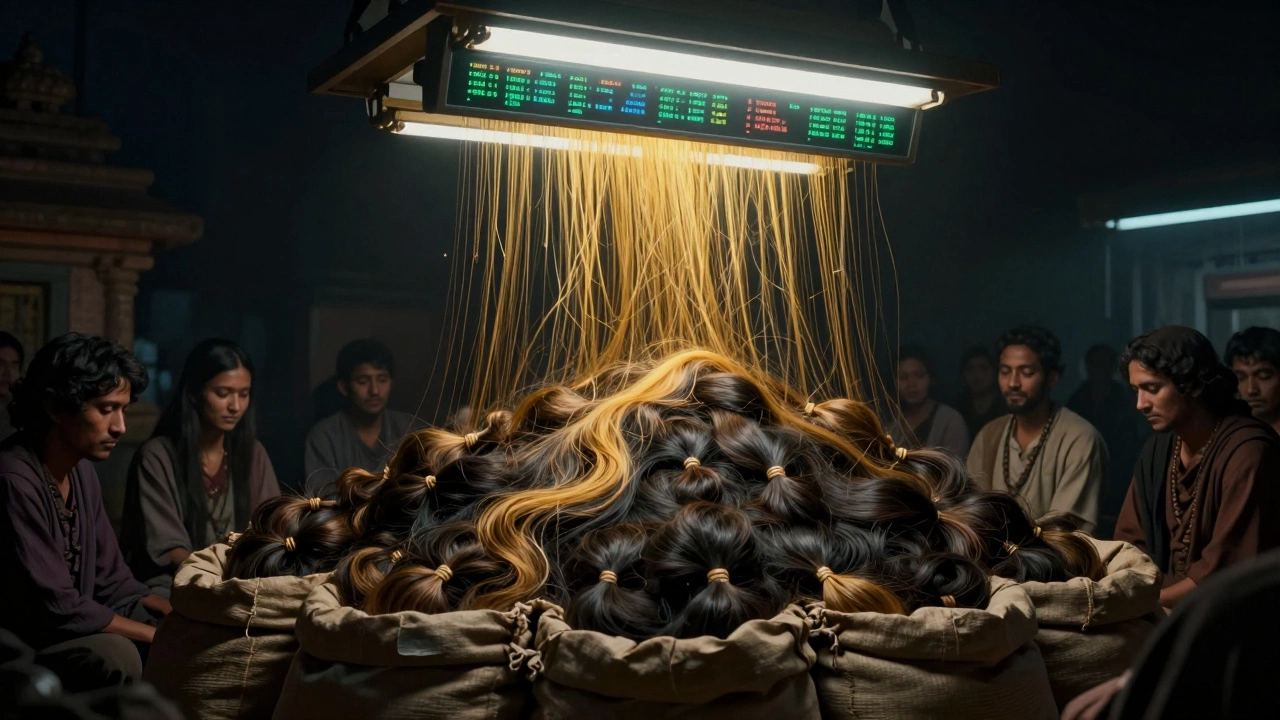
People don’t just visit Tirupati - they come to offer their hair. Every day, tens of thousands of devotees shave their heads as a sign of surrender. The temple’s hair collection unit processes over 1,000 kilograms of hair daily. That hair is sold to international wig makers, generating over ₹1,000 crore ($120 million) annually - money that feeds, shelters, and transports pilgrims for free. The temple runs the largest free meal program in the world, serving more than 100,000 meals a day. It’s not just a place of worship; it’s a self-sustaining ecosystem built on devotion.
What makes this possible? The temple’s management is run by the Tirumala Tirupati Devasthanams (TTD), a government-backed trust that’s been operating since 1933. TTD doesn’t just manage rituals - it runs hospitals, schools, bus services, and even a bank. Pilgrims can book free accommodation, get medical checkups, and even receive free transportation from nearby cities. The entire operation is funded by donations and the hair business, making it one of the few religious institutions in the world that doesn’t rely on government subsidies.
The Journey to the Temple
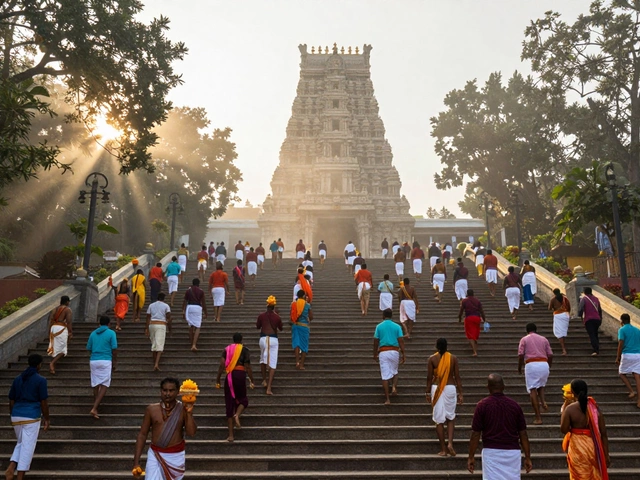
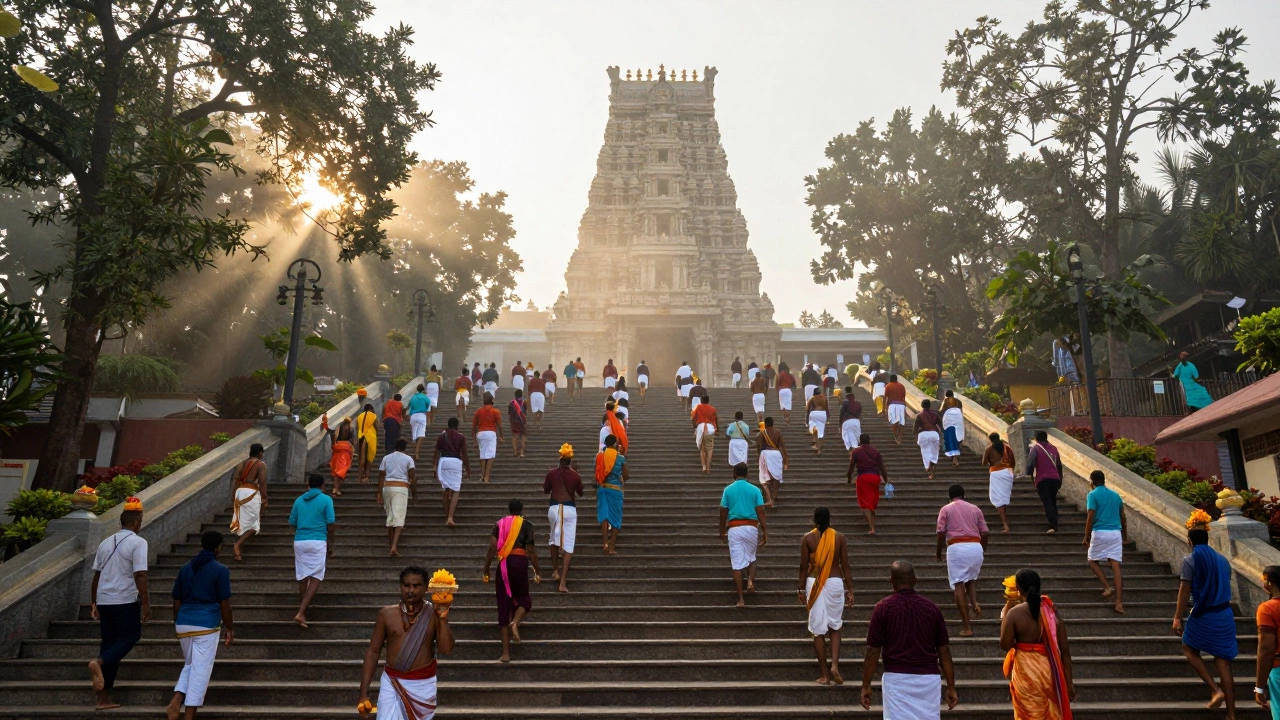
Reaching the temple isn’t easy. Tirumala sits on the Seshachalam Hills, 3,100 feet above sea level. For centuries, pilgrims climbed the 3,500 stone steps known as the Srivari Mettu - a seven-kilometer trek that takes 2-4 hours. Even today, over 20,000 people walk the path daily, barefoot, carrying offerings. But modern infrastructure has changed the game. Now, there are cable cars, shuttle buses, and a dedicated road for vehicles. Still, the climb remains a spiritual act for many. Those who walk say the physical effort purifies the mind.
The temple’s daily schedule is a marvel of logistics. It opens at 3 a.m. and closes at midnight. The main darshan (viewing of the deity) happens in the morning, but queues can stretch for 12-24 hours. To manage this, TTD uses a sophisticated online system called Supdarshan, where pilgrims book slots months in advance. Walk-ins can still enter through special queues, but wait times are longer. During festivals like Brahmotsavam, the temple sees over 1 million visitors in just ten days.
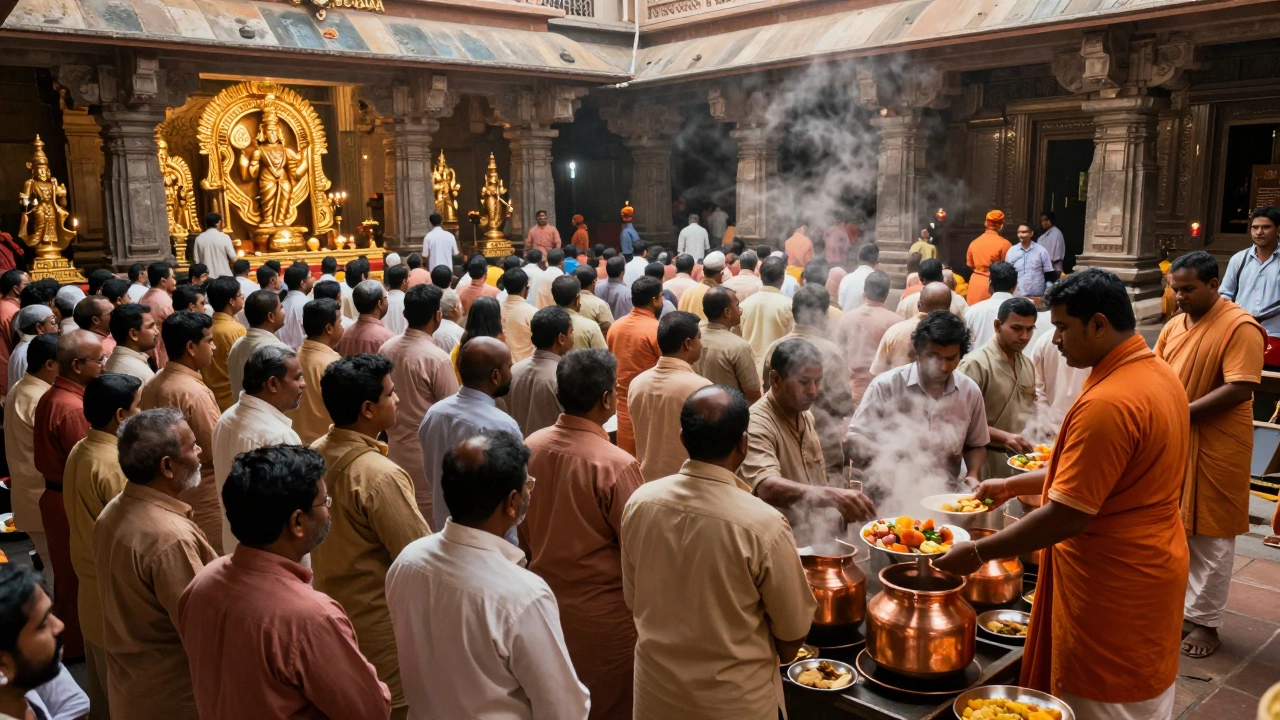
What Makes This Temple Different
There are thousands of Hindu temples in India. So why does Tirupati stand out? One reason is the belief that Lord Venkateswara grants wishes - especially financial ones. Many pilgrims come hoping for help with jobs, loans, or business. The temple’s reputation for fulfilling prayers has turned it into a cultural touchstone. You’ll hear stories of people who sold everything to make the pilgrimage and later found success. Whether you believe it or not, the emotional weight behind these stories is real.
The deity itself is unique. The idol of Lord Venkateswara is made of a rare black stone called shaligrama and is covered in gold and jewels. His face is painted with sandalwood paste and turmeric. Devotees believe the deity is alive - and that he sleeps, eats, and even needs to be dressed. The daily rituals include offering food, bathing the idol, and putting on fresh clothes. These aren’t performances - they’re sacred acts repeated with precision, day after day, for over 1,200 years.
Temple Tourism in India: A Bigger Picture
Tirupati isn’t the only major temple in India - but it’s the only one that operates at this scale. Other major pilgrimage sites include Vaishno Devi in Jammu (over 10 million visitors a year), the Jagannath Temple in Puri (8 million), and the Kashi Vishwanath Temple in Varanasi (7 million). But none come close to Tirupati’s numbers. The reason? Accessibility. Tirupati is well-connected by rail, road, and air. It’s within a 4-hour drive of major cities like Chennai, Hyderabad, and Bengaluru. It’s also one of the few temples that welcomes all castes and backgrounds without restriction.
Compare this to some smaller temples that require specific rituals, language knowledge, or local guides to enter. Tirupati doesn’t ask for any of that. You just show up. The temple’s rules are simple: no leather, no alcohol, no meat. Everyone, from billionaires to daily wage workers, stands in the same queue. This inclusivity is part of its power.
What to Expect When You Visit
If you’re planning a trip, here’s what you need to know. First, book your darshan slot online through the TTD website. It’s free, but slots fill up fast - especially during holidays. Second, pack light. You’ll need to leave shoes, bags, and electronic devices in the storage area. Third, wear simple cotton clothes. No jeans or tight outfits. Fourth, be ready for crowds. Even on a slow day, the temple compound feels like a small city.
Don’t miss the Akshaya Patra - the free meal served in the temple complex. It’s simple: rice, dal, vegetables, and chapati. But for many, it’s the most meaningful part of the visit. The food is cooked in massive vessels over wood fires, using water from a sacred spring. You’ll eat on the floor with hundreds of others, no hierarchy, no judgment. That’s the real magic of Tirupati.
Is Tirupati Worth the Trip?
It depends on what you’re looking for. If you want peace and quiet, this isn’t the place. If you want to witness organized devotion on a scale no other temple matches - then yes. You’ll see mothers carrying infants, elderly men with walking sticks, teenagers on school trips, and billionaires in tailored silk. All of them waiting, praying, and letting go. The temple doesn’t care who you are. It only asks that you come with an open heart.
And that’s why, year after year, over 40 million people make the journey. Not because it’s famous. Not because it’s rich. But because it offers something no other place can: the feeling that your prayers are heard - no matter how small, no matter how lost you feel.
Is Tirupati Temple open every day?
Yes, the Tirumala Venkateswara Temple is open 365 days a year. It opens at 3 a.m. and closes at midnight. Darshan slots are available throughout the day, but peak hours are between 6 a.m. and 2 p.m. Special rituals like the Suprabhatam (morning awakening of the deity) and the Evening Aarti are performed daily and are open to all visitors.
Do I need to pay to enter Tirupati Temple?
No, entry to the temple is completely free. There are no ticket fees for darshan. However, if you want to skip the long queues, you can book a paid Supdarshan slot for faster access. These cost between ₹300 and ₹2,000 depending on the time and type of darshan. Even if you don’t pay, you can still enter through the free queues - but expect to wait several hours.
Can non-Hindus visit Tirupati Temple?
Yes, people of all faiths are welcome to visit Tirupati Temple. There are no religious restrictions for entry. However, visitors must follow the temple’s dress code and rules: no leather items, no alcohol, and no non-vegetarian food inside the complex. The temple treats every visitor as a pilgrim, regardless of religion.
How long does it take to get darshan at Tirupati?
Wait times vary. On regular days, the free queue can take 8-12 hours. During festivals or holidays, it can stretch to 24 hours or more. If you book a paid Supdarshan slot, you can reduce the wait to under 2 hours. The fastest option is the special Divya Darshan for senior citizens and people with disabilities, which allows direct access with minimal waiting.
What should I wear when visiting Tirupati Temple?
Wear simple, modest clothing made of cotton. Men should wear dhoti, kurta, or pants with a shirt. Women should wear sarees, salwar kameez, or long skirts with blouses. Avoid jeans, tight clothing, shorts, tank tops, and leather accessories. You’ll need to remove all footwear before entering the temple, and bags and electronics must be stored in lockers provided at the entrance.
Next time you think about visiting a temple in India, remember: it’s not about the size of the building or the number of gold idols. It’s about the scale of human devotion. Tirupati doesn’t just house a god - it holds the collective hope of millions. And that’s something no other temple in the world can match.