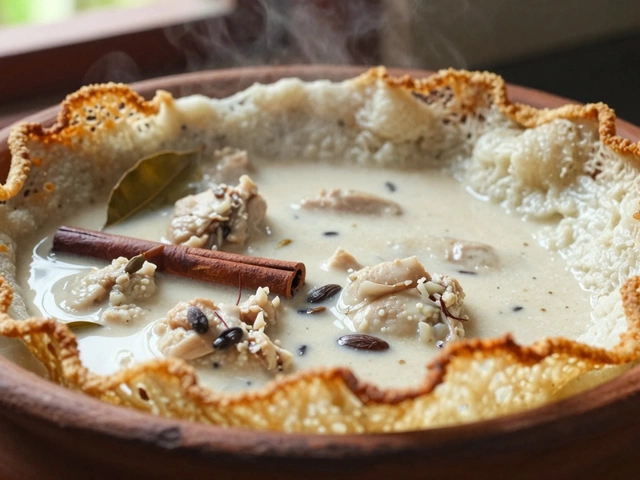
Ask anyone who’s traveled through Kerala and they’ll tell you the food stays with you longer than the scenery. It’s not just spice or coconut oil-it’s history, rhythm, and ritual in every bite. But if you had to pick one dish that defines Kerala, it’s not just a meal. It’s an experience: appam with stew.
Appam with Stew: More Than Just a Breakfast
Appam isn’t just a pancake. It’s a delicate, lacy-edged rice ferment, soft in the center like a cloud, made from ground rice, coconut milk, and a pinch of yeast. The edges crisp up in a special clay pot called an appachatti, while the middle stays tender and slightly sweet. You don’t eat it with a fork. You tear off a piece, dip it into a warm, spiced stew, and let the flavors melt together.
The stew? That’s where the magic happens. Coconut milk simmers with tender pieces of chicken, beef, or vegetables. Cinnamon, cardamom, cloves, and bay leaves float gently in the broth. It’s not fiery hot like a curry from the north-it’s layered, comforting, and quietly aromatic. You taste the coconut, then the warmth of spice, then the earthiness of lentils or potatoes. It’s a dish that changes subtly from household to household, but the soul stays the same.
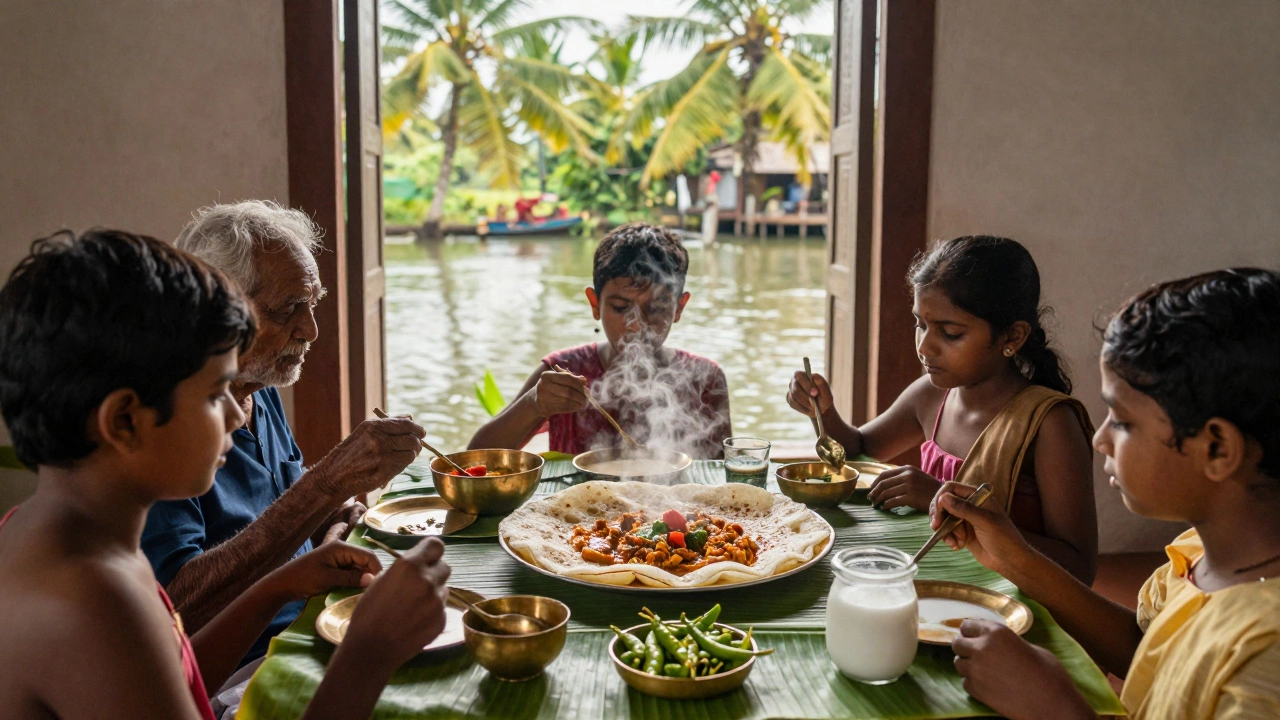
People in Kerala don’t just eat appam for breakfast. It’s served on Sundays, during festivals like Onam, and even at weddings. It’s the food you crave when you’re homesick. It’s what your grandmother made when you were sick. It’s the dish that connects generations.
Why This Dish, and Not Others?
You might think of Kerala’s famous dishes as being something else: fish curry, puttu and kadala, or sadya-the grand vegetarian feast served on banana leaves. And yes, those are important. But appam with stew stands apart because it’s the one dish that shows Kerala’s unique cultural blend.
Appam’s origins trace back to ancient rice fermentation techniques from the Malabar coast, but the stew? That’s where Portuguese, Arab, and Syrian Christian influences come in. The use of cinnamon and cloves? That’s the spice trade. The slow-simmered coconut milk base? That’s Kerala’s geography-coastal, humid, and rich with coconuts. The dish doesn’t shout. It whispers. And that’s why it’s the real signature.
Other states in South India have bold, spicy flavors. Tamil Nadu has its fiery sambar. Karnataka has its spicy curries. But Kerala? It finds power in balance. Appam with stew doesn’t overwhelm your palate. It invites you in. It makes you slow down. It’s not just food-it’s a lesson in patience.
The Ingredients That Make It Kerala
You can’t fake appam with stew. The ingredients are non-negotiable:
- Rice-preferably indigenous Kerala varieties like Kerala Matta or Kerala Red. These grains have a deeper flavor and hold up better during fermentation.
- Coconut milk-freshly extracted, not canned. The fat content matters. The first squeeze is rich and creamy; the second is thinner, used for diluting the stew.
- Spices-whole spices, not powdered. Cardamom pods cracked open, cinnamon sticks broken by hand, cloves toasted lightly. Powdered spices lose their soul.
- Protein-chicken is most common, but beef stew is traditional in Syrian Christian homes. Vegetarian versions use chickpeas, potatoes, and carrots.
- Appachatti-the traditional pot. While modern stoves make it easier, the clay pot gives the appam its signature texture. The heat rises slowly, letting the edges crisp without burning the center.
Try making it with store-bought rice flour or canned coconut milk, and you’ll taste the difference. It’s not just a recipe-it’s a tradition tied to place, season, and soil.
Where to Eat It in Kerala
If you’re traveling through Kerala, don’t just go to a fancy restaurant. Head to a local home, a temple kitchen, or a roadside chaya kada (tea stall) that’s been serving appam since the 1970s.
- In Thrissur, the Syrian Christian communities serve appam with beef stew on Sundays after church. The broth is darker, richer, with a hint of roasted coconut.
- In Kochi, you’ll find appam served with fish stew-tamarind adds a sour note, and small mackerel or sardines float in the coconut milk.
- In Alappuzha, the appam is thinner, almost like lace, and served with a mild vegetable stew made with jackfruit and tapioca.
- At Padmanabhapuram Palace, the royal kitchen still prepares appam with stew the way it was done in the 18th century-using wood fire and hand-ground spices.
Don’t expect menus to label it as “Kerala’s signature dish.” Locals just call it “appam.” You’ll have to ask, “What’s the stew made of today?” That’s when the real story begins.
How It Fits Into Kerala’s Food Culture
Kerala’s food isn’t about quantity. It’s about presence. The daily meal is called sadya-a feast of 20+ dishes served on a banana leaf. But appam with stew? That’s the quiet favorite. It’s what you eat after a long day of temple visits, backwater boat rides, or trekking through the Western Ghats.
It’s also the dish that travels with Keralites abroad. In Singapore, Dubai, or Sydney, you’ll find Kerala families making appam on Sunday mornings. It’s not nostalgia. It’s identity. It’s the one thing they refuse to compromise on.
Unlike other Indian cuisines that focus on bold flavors or complex spice blends, Kerala’s food is about harmony. The coconut isn’t just a flavor-it’s a texture. The fermentation isn’t just a process-it’s time honored. The stew isn’t just a sauce-it’s a memory.

What to Try Next
If appam with stew hooks you, here’s what to explore next:
- Puttu and kadala curry-steamed rice cylinders with black chickpea curry. A breakfast staple in northern Kerala.
- Meen curry-fish cooked in tamarind and coconut milk, often with curry leaves and dried red chilies.
- Thoran-a dry stir-fry of vegetables with grated coconut and mustard seeds. Simple, but deeply satisfying.
- Sadya-the full vegetarian feast. Best experienced during Onam in August or September.
- Unniyappam-sweet fried rice dumplings with jaggery and banana. Perfect with tea.
Each dish tells a different part of Kerala’s story. But appam with stew? It’s the opening line.
Is appam with stew spicy?
Not really. Kerala food uses spices for aroma, not heat. Appam with stew has warm spices like cinnamon and cardamom, but it’s rarely fiery. If you want spice, you can add a side of green chili chutney, but the stew itself is mild and comforting.
Can I make appam at home without a special pot?
Yes, but it won’t be the same. You can use a non-stick pan or a small wok, but the lacy edges and soft center won’t form the same way. The clay pot (appachatti) holds heat slowly and evenly, which is key. If you’re serious, invest in one-it’s worth it.
Is appam with stew vegetarian?
It can be. Many households make a vegetarian version with potatoes, carrots, peas, and chickpeas. The coconut milk and spices make it rich enough to stand alone. But the traditional version in Christian homes often includes chicken or beef.
What’s the best time to eat appam with stew?
Morning is traditional, but it’s eaten all day. Many families serve it for Sunday lunch or as a late-night snack after temple visits. It’s the kind of dish that fits any moment when you want comfort, not just food.
Is appam with stew popular outside Kerala?
Yes, but it’s often misunderstood. In cities like Bangalore or Mumbai, you’ll find it on menus, but it’s usually made with pre-made mixes or canned coconut milk. The real version-slow-fermented rice, fresh coconut milk, whole spices-is rare outside Kerala. That’s why locals say, “You haven’t had appam until you’ve had it in Kerala.”
Final Thought: The Taste of Home
Kerala’s food doesn’t try to impress. It doesn’t need to. It’s not loud. It doesn’t need to be. Appam with stew is quiet. It’s patient. It’s the kind of dish that makes you pause. You eat it slowly. You taste each layer. You remember where you are.
That’s why it’s the most famous food of Kerala. Not because it’s the spiciest, or the most exotic. But because it’s the most true.