India Vaccine Cost Calculator
Calculate your estimated vaccine costs for India based on your specific situation. This tool helps you budget for essential travel health measures without overspending.
Required if not previously vaccinated. Provides 5 years protection.
Provides 95% protection after 2 weeks. Full protection requires 2 shots.
Required if last dose was over 10 years ago. Lifetime protection.
Free with Australian Medicare if you've had it within 10 years.
Only needed if staying longer than 6 months or for specific activities.
If you’re planning a budget trip to India, you’ve probably already figured out how to sleep on overnight trains, eat street food without fear, and haggle for saris at half price. But one thing that still stops people cold? The list of vaccines. It’s not just about avoiding getting sick-it’s about keeping your trip on track. No one wants to spend their first week in Jaipur curled up in a hotel room with food poisoning or worse.
India isn’t a high-risk country for every disease, but it’s not a zero-risk one either. The CDC, WHO, and Australian Department of Foreign Affairs and Trade all agree: certain vaccines aren’t optional if you’re stepping off the plane in Delhi, Mumbai, or Varanasi. And for budget travelers, the cost of skipping them could mean losing weeks of travel-and hundreds of dollars in medical bills or missed tours.
These are the vaccines you actually need
Let’s cut through the noise. You don’t need every vaccine under the sun. But there are five that matter most for travelers on a budget, and they’re not expensive compared to what you’d pay if you got sick abroad.
- Typhoid - This isn’t just a travel myth. Typhoid fever spreads through contaminated food and water. Even the cleanest-looking street vendor in Agra can serve you infected water. A single shot (injectable) or two pills (oral) gives you protection for years. The injectable version lasts 2 years; the oral version lasts 5. For budget travelers, the oral version is cheaper and easier to get in Australia before you leave.
- Hepatitis A - This virus attacks your liver. It’s found in anything touched by someone who didn’t wash their hands after using the toilet. That includes ice in your drink, raw vegetables, and even fruit peeled by someone with dirty hands. The vaccine is two shots, six months apart. But even one shot gives you 95% protection within two weeks. That’s all you need if you’re leaving in a month.
- Polio - You might think polio is gone. It’s not. India was declared polio-free in 2014, but the virus still circulates in parts of Pakistan and Afghanistan-and travelers can bring it in. The WHO requires proof of polio vaccination for travelers from countries with recent cases. Australia recommends a booster if your last dose was more than 10 years ago. If you’re unsure, get a shot. It costs under $30 in Australia.
- Tetanus-Diphtheria-Pertussis (Tdap) - This combo shot protects you from three nasty diseases. Tetanus enters through cuts or scrapes-something you’ll get on a dusty road, a bike ride, or while helping a stray dog. The vaccine lasts 10 years. If you haven’t had one since you were a teen, get it now. It’s often free with your GP under Australia’s National Immunisation Program.
- Hepatitis B - This one’s trickier. You don’t need it if you’re sticking to tourist trails and avoiding needles or unprotected sex. But if you’re volunteering, getting a tattoo, or planning to stay longer than 6 months, it’s worth it. The vaccine is three shots over six months. If you’re short on time, you can get an accelerated schedule (shots at 0, 7, and 21 days) with a booster at 12 months.
That’s it. Five vaccines. No rabies unless you’re working with animals. No Japanese encephalitis unless you’re camping in rural rice fields for weeks. No cholera unless you’re doing humanitarian work. Keep it simple. Focus on what actually kills people on the road.
What about malaria pills?
Malaria pills aren’t injections, but they’re often lumped in with vaccines-and they’re a big deal. The short answer: you probably don’t need them if you’re sticking to cities and major tourist routes. Malaria is rare in Delhi, Jaipur, Agra, Mumbai, and even Goa. It’s a risk in forested areas of central India, parts of Odisha, and some rural pockets in the northeast.
If you’re heading to those areas, talk to a travel doctor. Doxycycline is the cheapest option-about $1 a day-and you can start taking it just one day before you enter the risk zone. But if you’re only going to the Golden Triangle or Kerala’s backwaters, skip it. The side effects (sun sensitivity, stomach upset) aren’t worth it for low-risk areas.
Instead, focus on mosquito avoidance: wear long sleeves at dusk, sleep under a net if your hostel doesn’t have AC, and use DEET repellent. It’s cheaper, safer, and just as effective.
When should you get these shots?
Timing matters. You can’t just walk into a clinic the day before your flight and expect to be protected.
- Typhoid (oral): Start 1 week before travel. Take one pill every other day for a total of four.
- Hepatitis A: Get the first shot at least 2 weeks before departure. The second isn’t urgent if you’re only traveling for a few weeks.
- Tdap: Can be done anytime. If you’re due, get it now.
- Polio: If you need a booster, get it at least 4 weeks before you leave.
- Hepatitis B: Start at least 6 months before. If you’re short on time, ask about the rapid schedule.
Most travel clinics in Australia can do all of these in one visit. You don’t need to book weeks ahead. Just call ahead and ask if they do travel vaccines. Some GPs offer them too-especially Tdap and Hep A.

What if you’re already in India?
If you’re already here and didn’t get vaccinated before you left? Don’t panic. But don’t wait either.
You can get most vaccines in India-but prices vary wildly. In Delhi or Mumbai, private clinics charge $15-$30 per shot. In smaller towns, it’s harder to find reliable ones. Some backpacker hostels have lists of trusted clinics. Always ask for the vaccine name, batch number, and expiration date. If they hesitate, walk out.
Don’t rely on Indian pharmacies for vaccines. They’re not regulated like Australia’s. Fake or expired shots are a real risk. Better to fly back to Australia for a booster than risk getting sick.
What documents do you need?
India doesn’t require proof of vaccination for entry-except for yellow fever if you’re coming from a country with risk of the disease (like Brazil or Uganda). So you won’t be stopped at the airport.
But keep your International Certificate of Vaccination or Prophylaxis (ICVP) anyway. It’s a little green booklet. If you ever need medical care in India, having proof you’re vaccinated can speed up treatment and avoid unnecessary tests.
Some tour operators and volunteer programs require proof of vaccination. If you’re doing a yoga retreat in Rishikesh or a volunteer project in Rajasthan, they’ll ask. Don’t get caught without it.
How much does this cost?
For budget travelers, cost is everything. Here’s the real price in Australia (as of 2025):
| Vaccine | Cost (AUD) | Protection Duration |
|---|---|---|
| Typhoid (oral) | $65 | 5 years |
| Hepatitis A (1 shot) | $80 | 20+ years (after 2nd) |
| Polio (booster) | $35 | Lifetime |
| Tdap | $0-$40 | 10 years |
| Hepatitis B (full course) | $150 | 20+ years |
That’s about $330 total for all five if you need everything. But if you’re up to date on Tdap and polio from childhood, you’re looking at $150-$200. That’s less than one night in a luxury hotel. And it’s the difference between a smooth trip and a medical emergency.

What if you’re scared of needles?
You’re not alone. Some vaccines come as pills (typhoid), others as nasal sprays (flu, but not useful for India). Hepatitis A and B are shots-but they’re tiny, like a pinprick. Most people feel nothing. If you’re anxious, ask for a numbing cream or ask the nurse to distract you with a joke. Seriously, they’ve seen it all.
And remember: the real risk isn’t the needle. It’s the diarrhea that keeps you stuck in a hostel for three days. Or the fever that makes you miss your train to Varanasi. Or the hospital bill that wipes out your travel fund.
What else should you pack?
Vaccines aren’t your only defense. Pack:
- Hand sanitizer with at least 60% alcohol
- Water purification tablets (iodine or chlorine dioxide)
- Oral rehydration salts (for diarrhea)
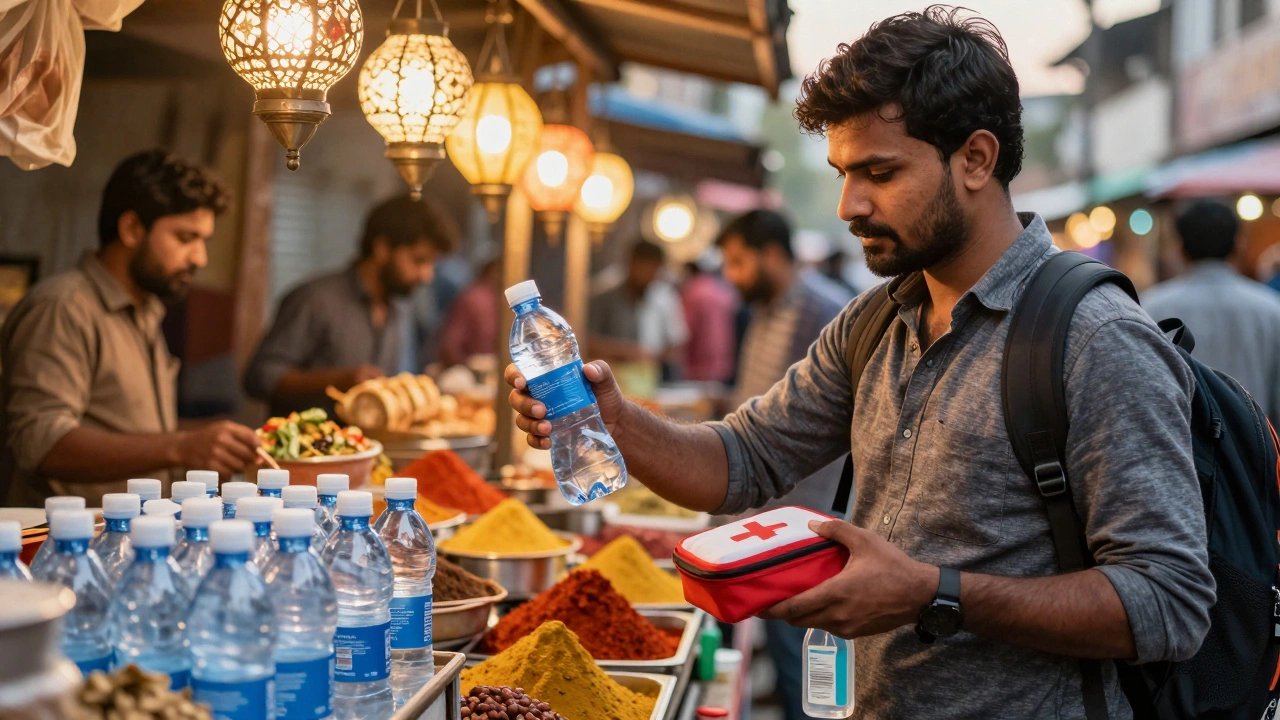
- A small first-aid kit with bandages and antiseptic
- A copy of your vaccination record (digital and printed)
And always drink bottled water-even if the bottle says ‘filtered.’ Stick to sealed bottles from big brands like Bisleri or Aquafina. Avoid ice unless you know it’s made from purified water.
Final advice: Don’t gamble with your health
Budget travel doesn’t mean cutting corners on safety. It means spending smart. You can sleep on a train for $5. You can eat street food for $1. But you can’t put a price on missing your dream trip because you skipped a $65 vaccine.
India rewards the prepared. The country is safe, welcoming, and full of magic-if you take the right steps before you go. Get your shots. Pack your supplies. Trust your gut. And then go explore.