Nataraja: The Dancing Form of Shiva and Its Cultural Power in India
When you think of Nataraja, the cosmic dancer form of the Hindu god Shiva, often depicted in a dynamic pose surrounded by fire, with one foot crushing a dwarf and the other raised in grace. Also known as Lord of the Dance, it represents the eternal cycle of creation and destruction that keeps the universe in motion. This isn’t just a statue—it’s a living symbol found in temples from Tamil Nadu to Varanasi, carved into stone, cast in bronze, and whispered about in chants that have echoed for over a thousand years.
Nataraja is more than religious art; it’s a bridge between physics and philosophy. The fire around him isn’t just decoration—it’s the energy of the cosmos. The drum in his hand beats the rhythm of time. The raised foot offers release from illusion. And the dwarf under his foot? That’s ignorance, crushed by awareness. You’ll find this same image in the same pose across India’s most sacred sites, especially in Chidambaram, where the temple itself is said to be the center of the universe. This isn’t coincidence—it’s intention. The Nataraja form was perfected during the Chola dynasty, and those bronze statues are still studied today by artists, scientists, and pilgrims alike. Even NASA placed a Nataraja statue outside its headquarters in 2004, not as a religious symbol, but as a metaphor for the dance of subatomic particles.
Related to this are the temples that house Nataraja, the rituals that honor him, and the festivals where his dance is reenacted through classical Bharatanatyam. You’ll see echoes of this in the way dancers move—each gesture, each step, carries meaning tied back to the Nataraja pose. It’s no surprise that posts on this site about Rameshwaram, Kumbh Mela, and Diwali all touch on deeper spiritual currents that Nataraja embodies. Whether you’re standing before a 12th-century bronze in a quiet temple or reading about a festival where thousands light lamps in rhythm, you’re feeling the same pulse: the dance of existence.
What you’ll find in the posts below isn’t a list of facts about statues. It’s a collection of stories that connect Nataraja to real places, real people, and real moments in India’s spiritual landscape. From the quiet devotion in a South Indian village to the grand rituals of pilgrimage sites, you’ll see how this one image—this one dance—holds together art, belief, and daily life across a vast and varied country.
Which Temple Is the Only One of Its Kind in India?
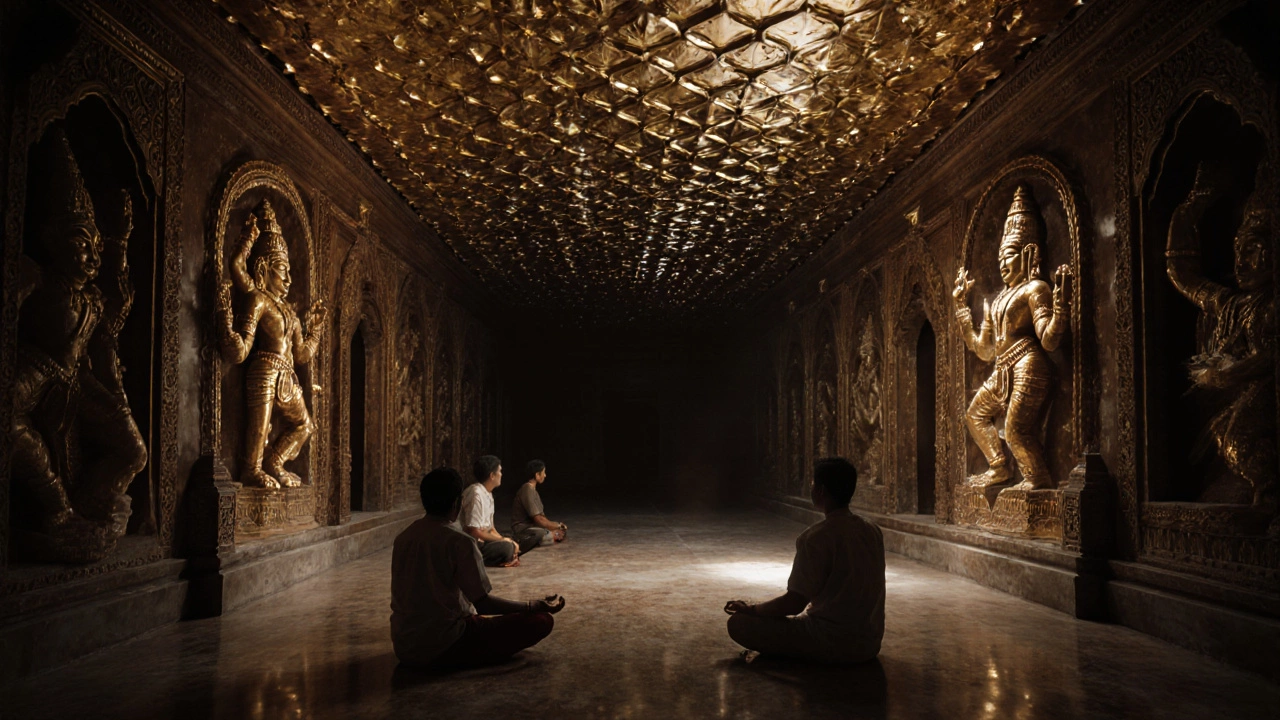
Chidambaram’s Nataraja Temple is the only temple in India where the main deity is not represented by an idol - but by an empty space under a golden roof, symbolizing the formless divine. A unique blend of science, spirituality, and ancient architecture.