Small Vacation Budget Calculator
Based on your actual spending patterns and Australia's typical getaway costs, this calculator helps you determine your realistic budget. Remember: don't guess - track your real expenses.
Your Budget Estimate
Your estimated minimum budget:
Your estimated ideal budget:
Remember: Always include the $50 buffer for hidden costs (parking, snacks, entry fees) as mentioned in the article. This calculator adds it automatically.
You want a break. Not a fancy resort. Not a flight overseas. Just a real pause-two days away from your routine, with good coffee, fresh air, and no emails. A small vacation. But how much should you actually save for it? The answer isn’t a number from a blog that doesn’t know your life. It’s a plan that fits your pocket.
Start with what you’re actually spending
Most people guess. They think, ‘I’ll spend $300.’ Then they end up with $500 in charges and feel guilty. Don’t guess. Track your last three weekend trips-even the tiny ones. Did you pay for parking at the beach? Did you buy snacks on the way? Did you upgrade your hotel room because it looked nicer? Write it all down. That’s your baseline.In Brisbane, a typical two-night getaway to the Sunshine Coast might include:
- Gas or public transport: $40-$80 round trip
- Accommodation: $120-$250 for a basic cabin or motel
- Food: $60-$100 for two people (breakfast, lunch, dinner, coffee)
- Activities: $0-$50 (beach access is free, but a kayak rental or guided walk isn’t)
- Extras: $20-$40 (souvenirs, ice cream, unexpected tolls)
Add that up. You’re looking at $240 to $520. That’s your real range. No fluff. No fantasy.
Where your money actually goes
The biggest surprise? It’s not the hotel. It’s the food and the little things you didn’t plan for. You think you’ll cook breakfast, but the Airbnb doesn’t have a kettle. You think you’ll pack lunch, but the trailhead has no shops and you’re starving. You end up buying a $15 sandwich and a $6 smoothie. Those add up fast.Here’s what most people forget:
- Entry fees-even small parks charge $10-$15 per car
- Parking-$5-$15 per day in tourist spots
- ATM fees-if you’re out of cash, you’ll pay $2-$4 per withdrawal
- Water-bottled water costs $4 in a gift shop. Bring your own.
Set aside $50 just for these hidden costs. Don’t count on them being free. They rarely are.
How to save without feeling deprived
You don’t need to live on rice and beans to afford a weekend away. You just need to shift a few habits.Try this: Every time you buy a coffee out ($5), a snack from the convenience store ($4), or a new playlist on Spotify ($3), put that same amount into a ‘Weekend Fund’ jar or a separate bank account. That’s $12 a day. In two weeks, you’ve got $168. In a month, $336. That’s your entire trip, paid for by skipping small luxuries you barely notice.
Or, if you’re paid weekly, set up a $20 automatic transfer every Friday. In six weeks, you’ve got $120. In ten weeks, $200. You don’t even feel it missing.
And here’s the trick: Don’t wait until you have ‘enough.’ Start small. Save $50 this month. Take a one-night trip to the Gold Coast. Sleep in a hostel. Walk the beach. Eat takeaway fish and chips on the pier. You’ll realize you don’t need much to feel like you’ve escaped.
Where to go for under 0 (Brisbane-friendly spots)
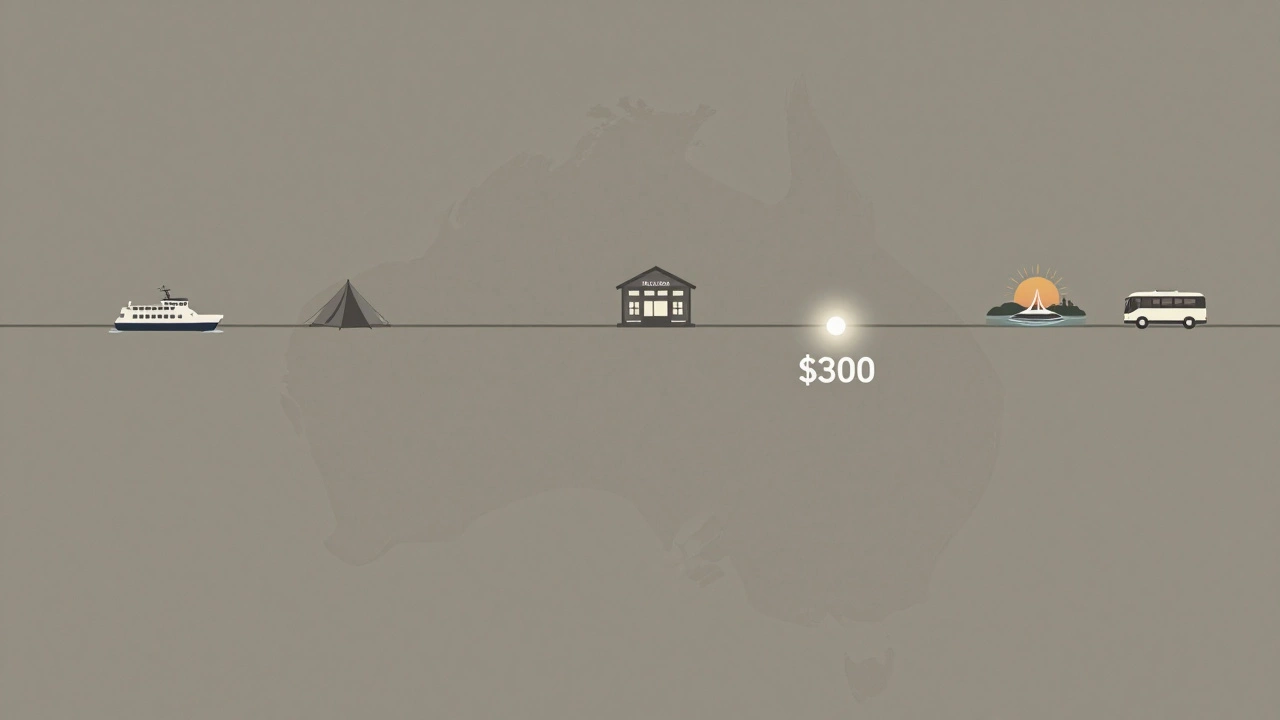
You don’t need to fly. You don’t need to book months ahead. Here are five real places you can reach in under three hours and spend less than $300 for two people:- Moreton Island-take the ferry ($45 round trip per person), camp ($25 per night), bring your own food. Total: under $200.
- Daylesford (VIC)-if you’re willing to drive 10 hours, it’s worth it. Basic B&B: $140, meals: $80, hot springs: free. Total: $220.
- Fraser Island-4WD tour from Hervey Bay ($180 pp, includes camping gear). Bring your own food. Total: $300 for two.
- Byron Bay-stay in a hostel ($75/night), walk to the lighthouse, eat at the farmers market. Total: $260.
- Canberra-free museums, walk around Lake Burley Griffin, stay at a budget motel ($110). Total: $240.
These aren’t luxury trips. They’re real escapes. You’ll sleep better. You’ll breathe deeper. You won’t need a credit card to feel like you’ve been away.
What not to do
Don’t book a hotel with a ‘free breakfast’ if you don’t eat breakfast. You’re paying for it anyway. Don’t rent a car if you can take a train or bus. Don’t buy a ‘vacation package’ that includes a $100 spa treatment you’ll skip. Don’t use your credit card and pay it off later. That’s not saving-that’s borrowing.Also, avoid peak times. A weekend in Noosa in December costs 3x what it does in May. If you can go midweek-even just Friday night to Sunday-you’ll save 20-40% on everything. Hotels drop prices. Restaurants have happy hours. The crowds vanish.
How to know you’ve saved enough
You’ve saved enough when you can leave without checking your bank app. When you can say ‘yes’ to that extra coffee, that little souvenir, that sunset cruise-without panic. That’s the real goal.Here’s a simple rule: Save enough to cover your base costs (transport, stay, food) + $50 buffer. That’s it. If you can do that, you’re ready. You don’t need a fancy itinerary. You don’t need Instagram-worthy photos. You just need to get out.
Next month, you’ll be back at your desk. But you’ll have a memory of the smell of salt air, the sound of birds at dawn, the quiet of a beach with no one else around. That’s worth more than any savings goal.
Quick checklist: Your small vacation budget
- Transport: $40-$100
- Stay: $100-$250
- Food: $60-$100
- Activities: $0-$50
- Hidden costs buffer: $50
- Total target: $250-$500
Start with $300. That’s your minimum. If you can stretch to $400, you’ll have breathing room. If you save $500, you can do it twice a year. And that’s more than enough.
How much should I save for a weekend getaway if I’m on a tight budget?
You can do a weekend getaway for as little as $250 if you plan smart. Skip hotels-camp or stay in a hostel. Cook your own meals or eat at local markets. Use public transport or carpool. Skip paid attractions. Focus on free things: beaches, walks, parks, sunsets. The $50 buffer for parking, water, or snacks is non-negotiable.
Is it better to save monthly or save up for one big trip?
Save monthly. Small, frequent breaks are better for your mental health than one big trip every year. A $50 monthly habit gives you two getaways a year. One big trip costs more, takes longer to save for, and often leaves you exhausted and broke afterward. Small trips reset you. Big trips drain you.
Should I use my credit card for a small vacation?
Only if you pay it off before the next statement. Otherwise, don’t. The interest on a $400 vacation at 18% APR adds $60 in a year. That’s like paying for a second trip just to borrow the money. Use cash or debit. It forces you to stick to your budget.
What’s the cheapest way to travel within Australia for a weekend?
Take the bus. Greyhound and NSW TrainLink offer $20-$40 one-way fares between major cities. Combine that with camping or staying in a backpacker hostel ($30/night), and you’re under $150 for a full weekend. Bring your own food. Walk everywhere. You’ll save more than you think.
Do I need travel insurance for a small local trip?
If you’re driving or taking public transport within Australia, you likely don’t need it. Your car insurance and Medicare cover most risks. But if you’re doing something risky-hiking remote trails, kayaking, or renting a 4WD-then get a basic policy. It costs $15-$25 and covers medical emergencies or gear loss. Don’t skip it if you’re venturing off the beaten path.