Most Eaten Food in India: What People Really Eat Every Day
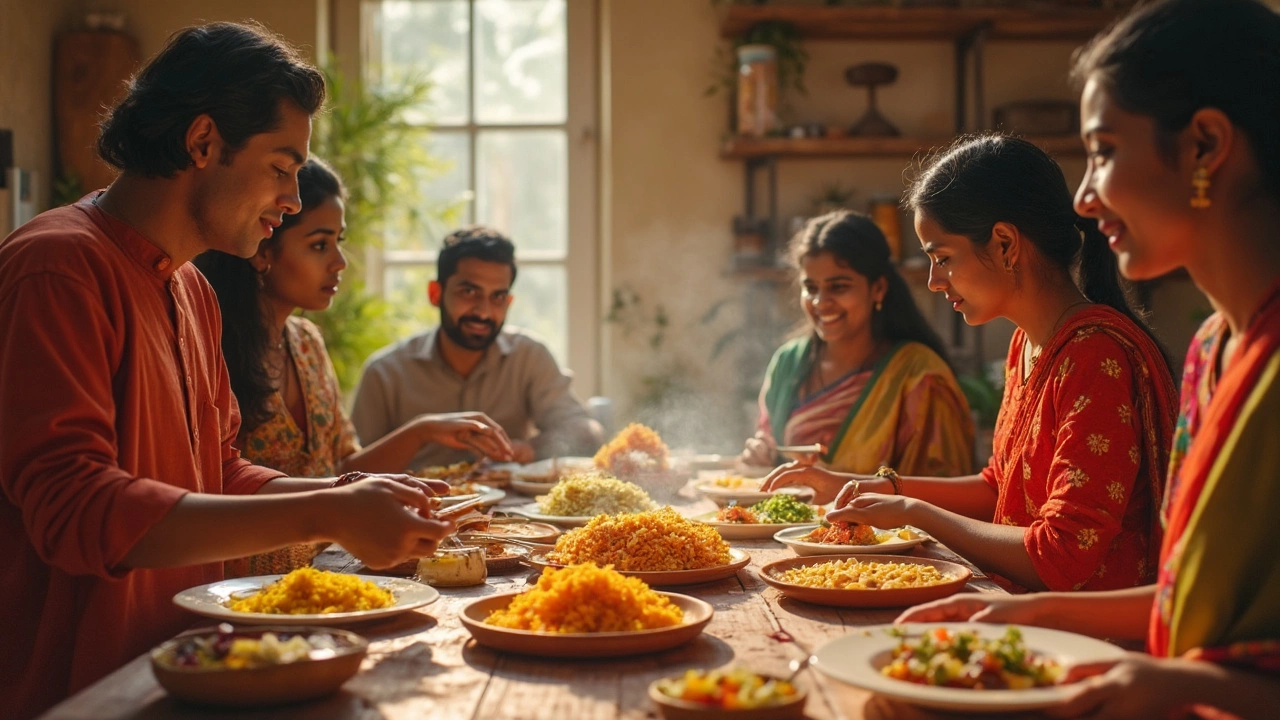
When you think of Indian food, you probably imagine spicy curries, fragrant biryanis, or crispy samosas. But the most eaten food in India, the everyday meals consumed by hundreds of millions across villages and cities. Also known as daily Indian food, it’s not the dishes you see in restaurants—it’s what’s cooked in homes, sold at street corners, and eaten with bare hands at dawn and dusk. This isn’t about fancy platters or festival feasts. It’s about the quiet, constant rhythm of food that keeps the country running.
The real backbone of Indian meals is simple: rice, a staple grain consumed daily by over 60% of the population, especially in the south and east, and wheat, the foundation of roti, paratha, and naan, eaten from Punjab to Odisha. These aren’t optional—they’re the canvas. On top of them, you’ll find lentils—dal, cooked soft with turmeric and cumin, often the only protein in a meal. In the north, it’s chana dal. In the south, it’s toor dal. In the east, it’s masoor. Same purpose: cheap, filling, and packed with nutrition.
Then there’s khichdi, a humble mix of rice and lentils, simmered with ginger and cumin, eaten from Kashmir to Kanyakumari. It’s the food of sick days, newborns, and fasting days. It’s the one dish that crosses religious, caste, and regional lines. You’ll find it in a palace kitchen and a roadside hut with equal pride. And don’t forget the flatbreads—roti made fresh every morning, parathas stuffed with potato or cauliflower, eaten with pickles or yogurt. These aren’t side dishes. They’re the main event.
What you won’t find as often as you think? Biryani. It’s a celebration dish. Not a daily meal. Same with butter chicken or paneer tikka. They’re for guests, for weekends, for tourists. The real food is what’s cooked before sunrise—steaming rice in a clay pot, dal bubbling on a gas stove, rotis flipping on a tawa. It’s food that doesn’t need a name. It just is.
And here’s the thing: no two regions eat the same way. In Gujarat, you’ll find dhokla and thepla. In Bengal, it’s rice with fish curry. In Rajasthan, it’s bajra roti with ker-sangri. In the Northeast, fermented soy and bamboo shoots are daily staples. But beneath all that variety, the pattern holds: grain, legume, vegetable, spice. Simple. Sustaining. Unchanged for centuries.
What you’ll find in the posts below isn’t a list of top 10 Indian dishes. It’s the truth behind what’s actually eaten. You’ll read about why khichdi is the closest thing India has to a national dish, how regional diets shape daily life, and why some foods are eaten not because they’re tasty—but because they’re necessary. No fluff. No tourist traps. Just the real food, on real plates, eaten by real people every single day.
Most Eaten Thing in India: Unpacking India's Food Obsession
Curious about what Indians eat the most? This article digs into the real daily dishes found in Indian homes, revealing how food habits connect with culture, geography, and daily life. Discover why one staple rules most plates from north to south, plus how street food and snacks fit into the big picture. You'll also find tips on trying these foods and fitting in like a local. Whether planning a trip or just eating your way through India's flavors, this guide makes the country's food scene easy to understand.