Indian Religions: Sacred Traditions, Pilgrimages, and Spiritual Landscapes
When you think of Indian religions, the deep-rooted spiritual systems that guide daily life, rituals, and festivals across the Indian subcontinent. Also known as Dharmic faiths, they aren’t just beliefs—they’re living traditions woven into the land, rivers, and rhythms of millions. Unlike organized religions elsewhere, Indian religions don’t fit neatly into boxes. They blend philosophy, ritual, nature worship, and community in ways that surprise even long-time visitors. At their core are practices that have survived for thousands of years, passed down not through dogma but through experience—in temple chants, monsoon processions, and silent meditations under banyan trees.
One of the most powerful expressions of these faiths is the Hindu pilgrimage, the journey to sacred sites believed to hold divine energy. This isn’t tourism—it’s devotion on foot. Millions walk for days to reach Kumbh Mela, the world’s largest religious gathering, where over 100 million people bathe in the same river at once. Then there’s Jyotirlinga, the 12 sacred Shiva shrines scattered across India, each said to be a pillar of light from the divine. And don’t forget the Char Dham, the four holy sites that every devout Hindu hopes to visit in their lifetime. These aren’t tourist spots. They’re spiritual milestones.
What makes Indian religions so enduring isn’t just their age—it’s how they live inside everyday life. You’ll find them in the quiet temple at the edge of a village, in the morning aarti on the Ganges, in the way a family prepares khichdi as an offering. They don’t demand conversion. They invite participation. That’s why even a traveler who doesn’t pray can feel something when standing before the empty golden space in Chidambaram, or walking the narrow lanes of Rameshwaram where the sea meets prayer. These places don’t just hold history—they hold presence.
What you’ll find in the posts below isn’t a textbook on theology. It’s real stories from real places—the temple that worships an empty space, the festival that draws more people than any event on Earth, the island where a god’s name is whispered in the wind. These are the living threads of Indian religions—not myths, not monuments, but moments that still move millions.
Who is the Founder of Hinduism? Exploring India's Ancient Spiritual Roots
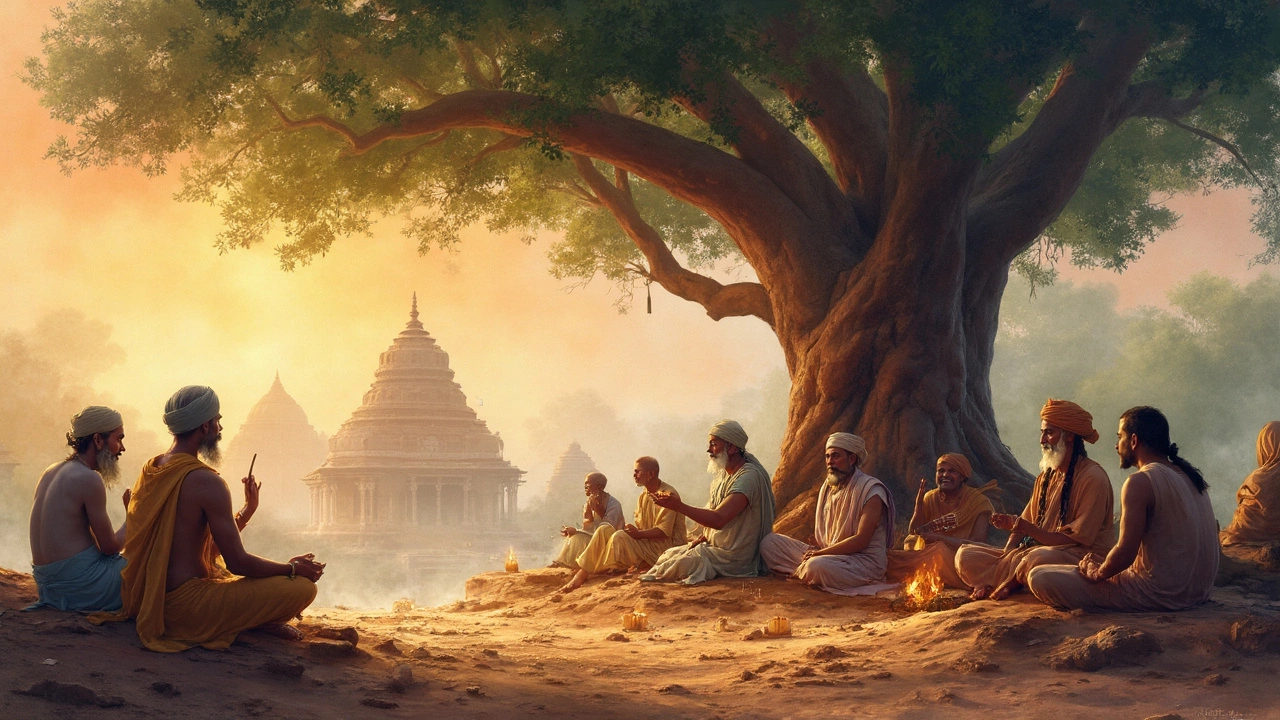
Wondering who started Hinduism? The truth might surprise you. Instead of one founder like many religions, Hinduism grew over thousands of years, shaped by countless sages and traditions. We'll dig into how this ancient way of life took shape, why temples are central, and what makes exploring India’s holy sites special for both travelers and spiritual seekers. Dive in for tips that make your temple visits more meaningful.