Indian Pilgrimage: Sacred Sites, Rituals, and Spiritual Journeys Across India
When people talk about Indian pilgrimage, a deeply rooted spiritual tradition where millions travel to sacred sites for devotion, cleansing, and connection with the divine. Also known as tirtha yatra, it’s not just about visiting temples—it’s about transformation. This isn’t a tourist activity. It’s a personal journey, often taken across harsh terrain, long distances, and through seasons of heat and rain, all to reach a place believed to hold divine energy.
At the heart of Indian pilgrimage are places like Rameshwaram, a sacred island temple where the divine presence is tied to Lord Rama’s legend and the site holds dual status as both a Jyotirlinga and a Char Dham. This rare combination makes it one of the most powerful destinations in Hinduism. Then there’s the Char Dham, the four holy sites—Yamunotri, Gangotri, Kedarnath, and Badrinath—that every devout Hindu aspires to visit at least once in their lifetime. These aren’t just locations; they’re spiritual checkpoints, each tied to cosmic myths and ancient texts. And let’s not forget the Jyotirlinga, the twelve sacred shrines where Shiva is worshipped as a column of light, representing the infinite nature of the divine. Each one has its own story, its own rituals, and its own pull on the faithful. These aren’t random temples. They’re anchors in a spiritual map that’s been followed for thousands of years.
What makes Indian pilgrimage different from other religious travels? It’s the scale, the rhythm, and the community. Imagine walking barefoot for days, joining thousands chanting the same mantras, bathing in rivers believed to wash away sins, or sleeping in simple dharamshalas next to strangers who become fellow seekers. It’s not about comfort. It’s about surrender. And it’s alive today—not just in ancient texts, but in the daily lives of families, solo travelers, and elders who make this journey again and again.
You’ll find this energy in the quiet rituals of Chidambaram’s empty space, where Shiva is worshipped as formless consciousness. You’ll feel it in the crowds at Diwali, when temples blaze with light and the whole country pulses with devotion. You’ll hear it in the chants along the Ganges, where pilgrims come to release ashes and find peace. This isn’t a single trip. It’s a thread running through Indian life—connecting village to city, youth to elder, earth to eternity.
Below, you’ll find real stories and clear guides about the most powerful pilgrimage sites in India—what makes them sacred, how to visit them wisely, and why people keep coming back. No fluff. Just what matters.
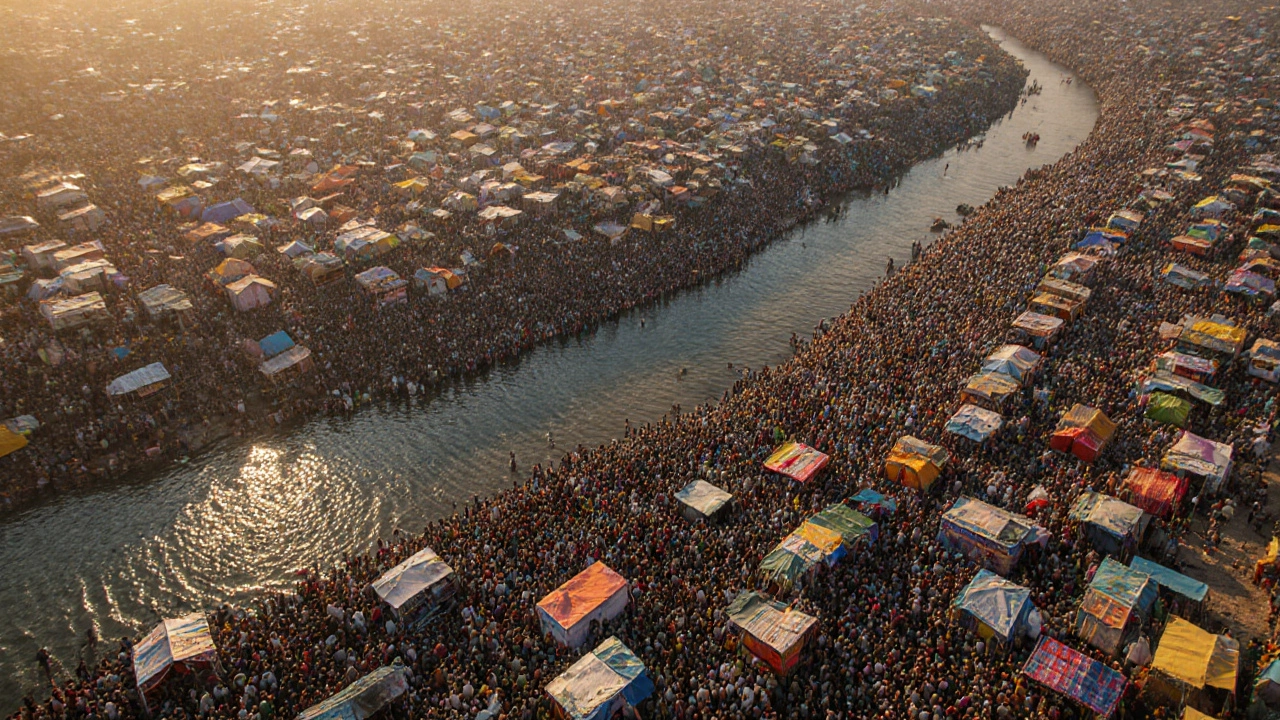
India's Largest Religious Festival: The Complete Kumbh Mela Guide
Explore India's largest religious festival, Kumbh Mela. Learn about its history, locations, dates, rituals, and travel tips for a seamless pilgrimage experience.