Ajanta Caves: Ancient Art, Spiritual History, and India’s Hidden Masterpieces
When you think of Ajanta Caves, a series of 30 rock-cut Buddhist cave monuments in Maharashtra, India, dating back to the 2nd century BCE to 6th century CE. Also known as Ajanta Ellora Caves, they are among the oldest and most complete surviving examples of ancient Indian painting and sculpture. These aren’t just holes in a cliff—they’re time capsules of faith, art, and daily life from a civilization that thrived over two thousand years ago.
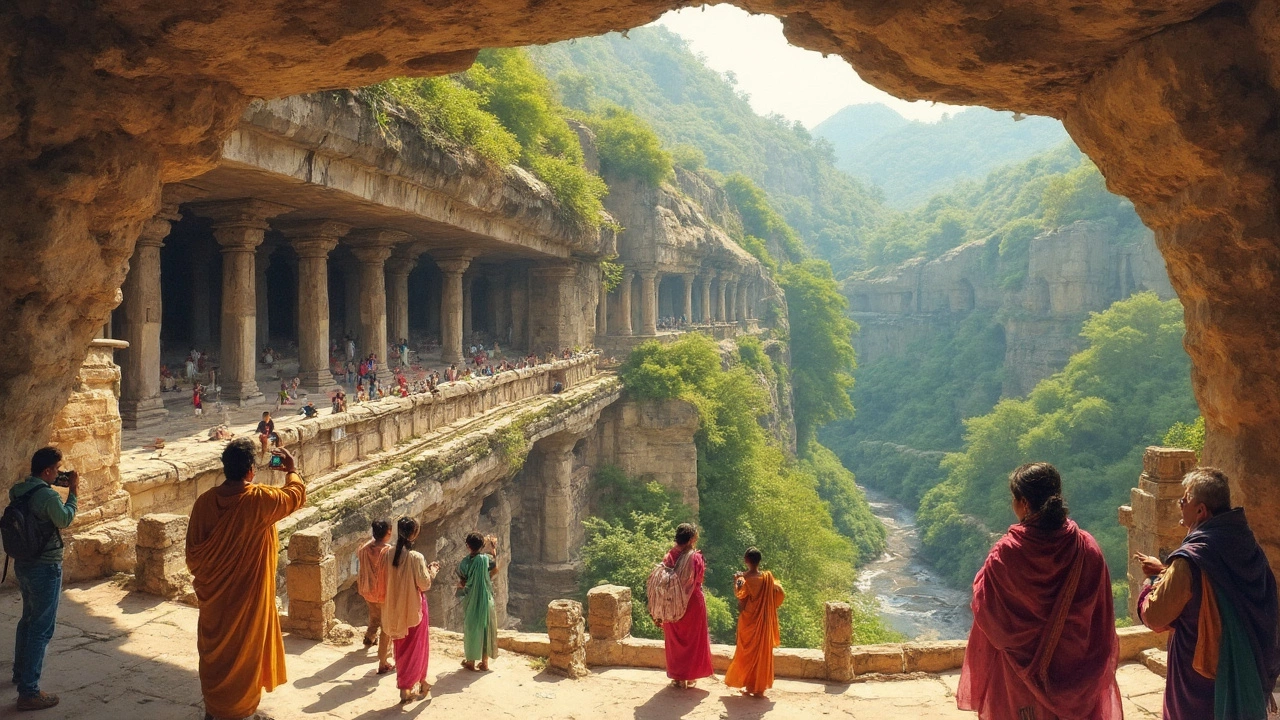
The Buddhist heritage, the spiritual and cultural traditions tied to early Buddhism in India, especially through monastic communities and cave temples at Ajanta is unlike anything else. Unlike later temples with towering spires, these caves were carved downward into basalt rock by hand, using simple tools. Monks lived, meditated, and taught here. Artists painted scenes from the Jataka tales—stories of the Buddha’s past lives—on every wall, ceiling, and pillar. The colors? Made from crushed minerals, plant dyes, and even lapis lazuli imported from Afghanistan. And guess what? Most of these paintings still glow with color today, even after 1,500 years.
The Indian rock-cut architecture, a unique method of creating structures by carving directly into solid rock, rather than building with separate materials at Ajanta influenced temples across Asia. You’ll see echoes of its style in Ellora, Elephanta, and even in Southeast Asia. But Ajanta stands out because of its storytelling. One cave shows a prince leaving his palace in sorrow; another, a royal procession with elephants and musicians. These aren’t just religious images—they’re snapshots of ancient Indian society: what people wore, how they danced, what they believed.
It’s no surprise the UNESCO World Heritage, a global designation given to sites of outstanding cultural or natural importance, recognized for their universal value label was given to Ajanta in 1983. This isn’t just about tourism. It’s about preserving a voice from the past that still speaks—clearly, beautifully, and powerfully. The caves were abandoned for centuries, swallowed by jungle, until British soldiers stumbled upon them in 1819. Today, they’re protected, studied, and visited by scholars and travelers alike.
What you won’t find here are crowds of selfie-takers. The magic of Ajanta lies in its quietness. The dim light, the echo of footsteps, the way the murals seem to breathe when you stand still long enough. It’s not a place you rush through. It’s a place you sit with. You’ll leave not just with photos, but with a sense of awe for what humans could create without electricity, without modern tools—just patience, skill, and devotion.
Below, you’ll find posts that explore how Ajanta connects to other parts of India’s spiritual and artistic legacy—from the temple carvings of Khajuraho to the quiet devotion of modern pilgrims. You’ll see how these caves shaped India’s identity, influenced global art history, and still hold secrets waiting to be understood. Whether you’re planning a trip or just curious about ancient worlds, this collection will show you why Ajanta isn’t just a site—it’s a living conversation across time.
Oldest World Heritage Site in India: Exploring the Ancient Roots
Curious about where India's oldest World Heritage Site is? This article pinpoints the very first UNESCO-recognized site, reveals what makes it so unique, and offers handy tips if you want to see it yourself. Expect fascinating details about its age, art, and how to experience it without the usual tourist hassle. Whether you're planning a trip or just love history, you'll get practical info here. Prepare for a peek into a piece of ancient India that still surprises experts today.